

In the field of advanced physics and medical imaging, electrical contacts must operate in environments where temperatures approach absolute zero. Cryogenic superconducting contacts are essential components in MRI machines, particle accelerators, and quantum computing refrigerators. Operating at these extremes presents unique challenges that standard electrical contact materials simply cannot handle.
Conductivity at Ultra-Low Temperatures
As temperature decreases, the electrical resistivity of pure silver drops significantly, following the Bloch-Grüneisen law. At cryogenic temperatures (e.g., 4.2K), silver becomes an exceptionally efficient conductor. However, the contact interface still presents a bottleneck. For superconducting applications, maintaining a low-resistance metallurgical bond between the superconductor and the silver contact rivet is critical to prevent localized heating that could cause a “quench” or loss of superconductivity.
Thermal Expansion and Mechanical Stress
One of the primary challenges in cryogenic design is Coefficient of Thermal Expansion (CTE) mismatch. When a system is cooled from room temperature to 4K, the materials shrink at different rates. If the silver contact rivet and the substrate have significantly different CTEs, the resulting stress can cause the contact to delaminate or crack. At Contactrivets, we use specialized silver alloys and bimetal designs that are engineered to maintain mechanical integrity throughout the entire cooling cycle.
Material Selection: High-Purity Silver and Beyond
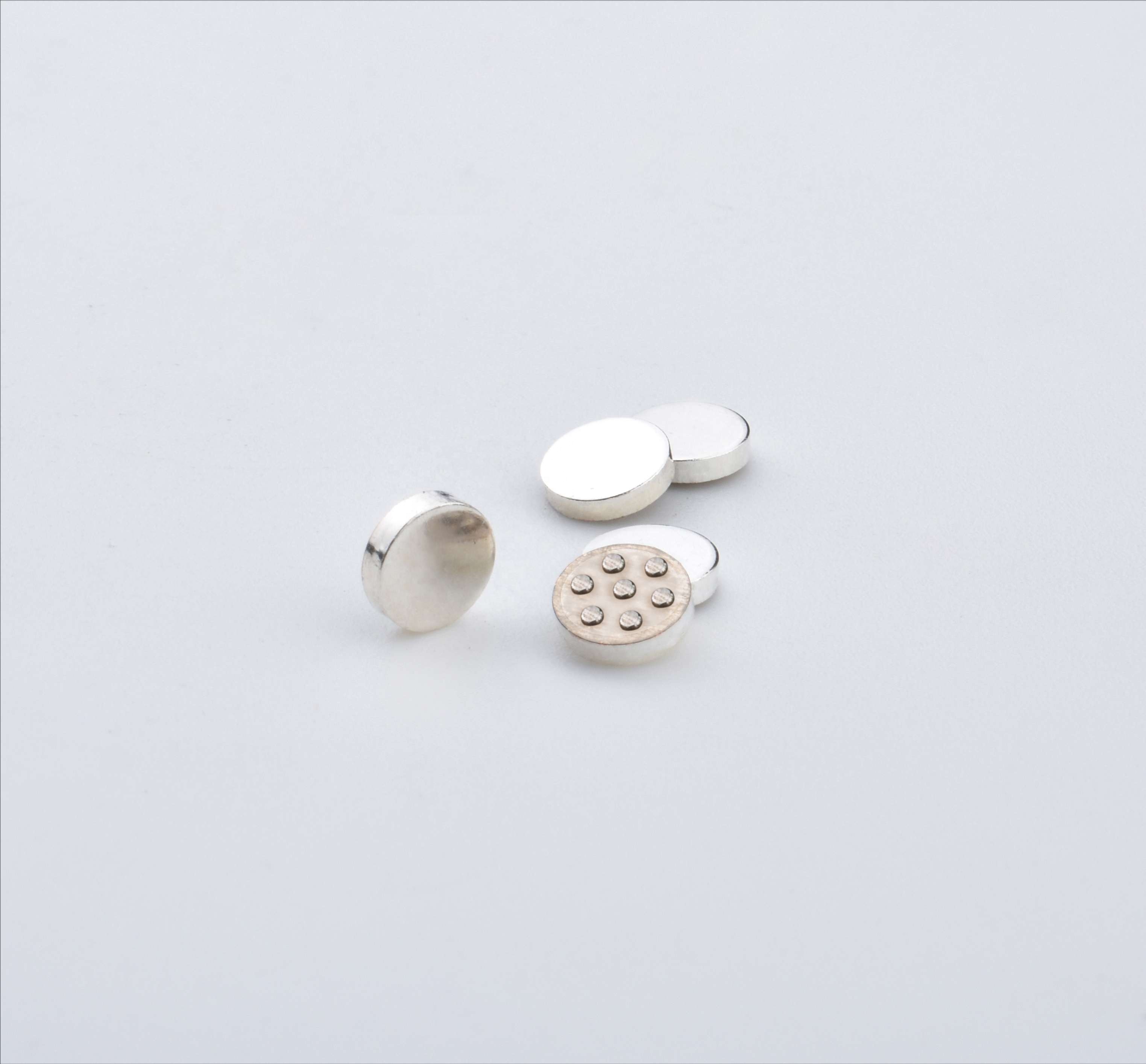
For cryogenic signal switching, High-Purity Silver (99.99%+) is often the base material. To improve mechanical durability without sacrificing conductivity, trace amounts of hardening agents may be added. For the most demanding superconducting joints, silver is often used as a cladding or “cap” on copper shanks to provide a highly conductive interface for the superconducting wires. These bimetal rivets must be manufactured with zero-void interfaces to ensure maximum thermal and electrical stability.
Applications in Quantum Computing and MRI
In quantum computers, the diluation refrigerators require thousands of signal connections that must operate with near-zero heat dissipation. Similarly, MRI systems rely on high-current superconducting switches to maintain the main magnetic field. Our precision contact rivets are designed to meet the rigorous purity and geometry requirements of these high-tech sectors, ensuring that your cryogenic systems remain stable and efficient.
Conclusion
Operating at the limits of temperature requires materials that are engineered for the task. Cryogenic superconducting contacts are a testament to the precision of modern metallurgy. By prioritizing high-purity silver and CTE-matched designs, engineers can build systems that push the boundaries of science and medicine. Contact Contactrivets for a technical review of your cryogenic contact requirements and learn how our advanced silver alloys can power your next discovery.