The performance of silver-based electrical contacts is intrinsically linked to their microstructural evolution under thermal and electrical stress. For metallurgical engineers, grain boundary migration and grain growth are critical phenomena that dictate the electrical life and mechanical stability of a contact. Understanding these processes is essential for developing materials that can withstand millions of switching operations in demanding industrial environments.
The Physics of Grain Boundary Migration
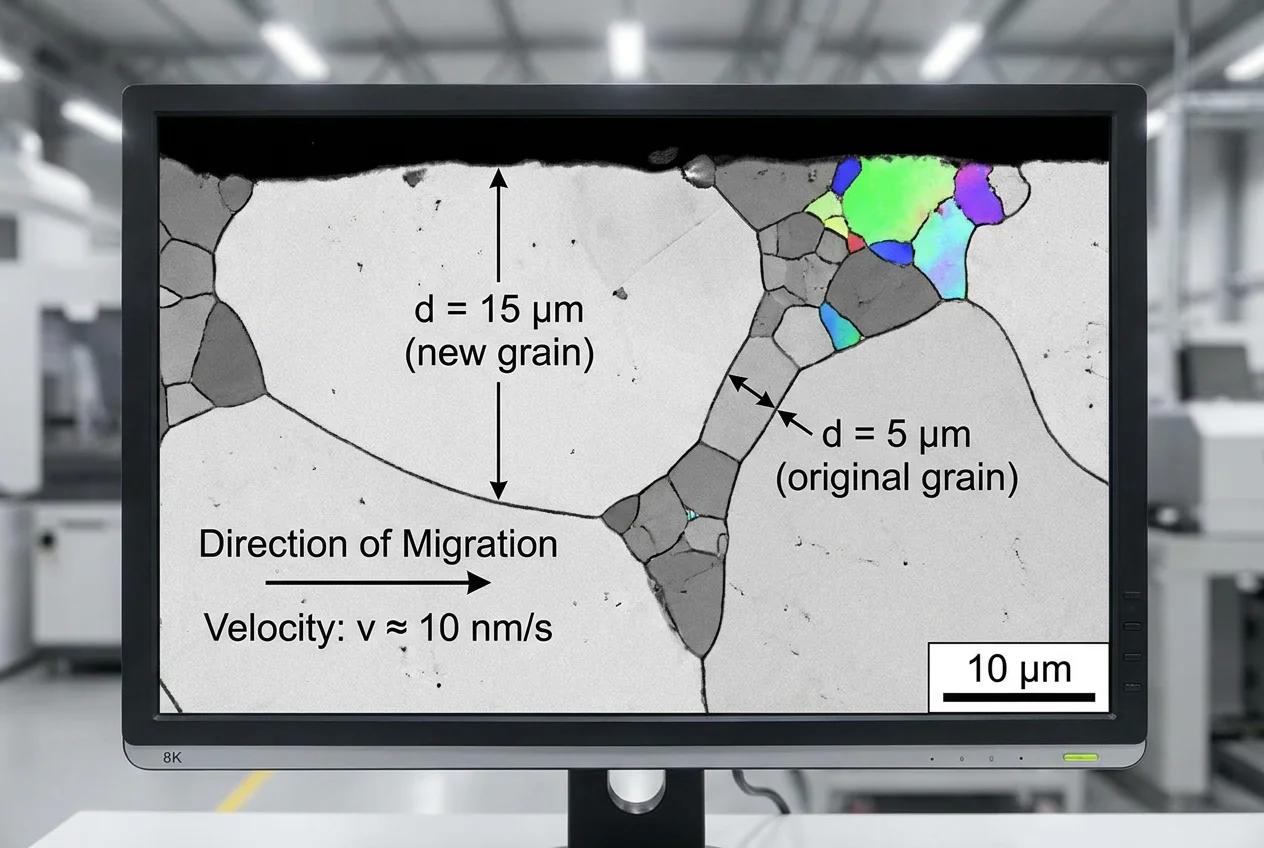
In silver alloys, grain boundaries are regions of high energy. When subjected to high temperatures—either from ambient heat or Joule heating during contact operations—the grain boundaries tend to move to reduce the total free energy of the system. This movement, or migration, leads to grain growth, where larger grains consume smaller ones. While a larger grain size can improve electrical conductivity, it often comes at the expense of mechanical strength and anti-welding properties.
Zener Pinning: The Role of Oxide Particles
In materials like Silver Tin Oxide (AgSnO2) and Silver Cadmium Oxide (AgCdO), the dispersed oxide particles play a vital role in controlling grain growth through a mechanism known as Zener pinning. The oxide particles sit on the grain boundaries, acting as physical barriers that impede their movement. By optimizing the size and distribution of these oxides, we can “pin” the grain boundaries, maintaining a fine-grained microstructure even at elevated temperatures. This fine-grained structure is essential for resisting arc erosion and preventing the localized melting that leads to contact welding.
Microstructural Degradation under Electrical Stress
During each switching operation, the contact surface is subjected to intense localized heating from the plasma arc. This causes rapid thermal cycling that can accelerate grain boundary migration. Over time, the microstructure near the surface may coarsen, leading to the formation of “soft spots” or cracks. At Contactrivets, we use Scanning Electron Microscopy (SEM) to monitor these microstructural changes during electrical life testing, allowing us to refine our material compositions for maximum stability.
Impact on Mechanical Properties
The relationship between grain size and yield strength is defined by the Hall-Petch equation. Coarse-grained silver contacts are generally softer and more prone to mechanical deformation under the high impact forces of relay operation. A stable, fine-grained microstructure ensured by effective Zener pinning ensures that the contact maintains its Vickers hardness and physical geometry over millions of cycles, ensuring consistent contact pressure and low resistance.
Conclusion
Microstructure is the silent determinant of contact performance. By understanding and controlling grain boundary migration and grain growth, engineers can design silver-based materials that offer the ultimate in durability and reliability. At Contactrivets, our metallurgical expertise is at the heart of every contact rivet we manufacture. Contact us to learn more about how our advanced AgSnO2 and AgZnO materials can enhance your switching applications.