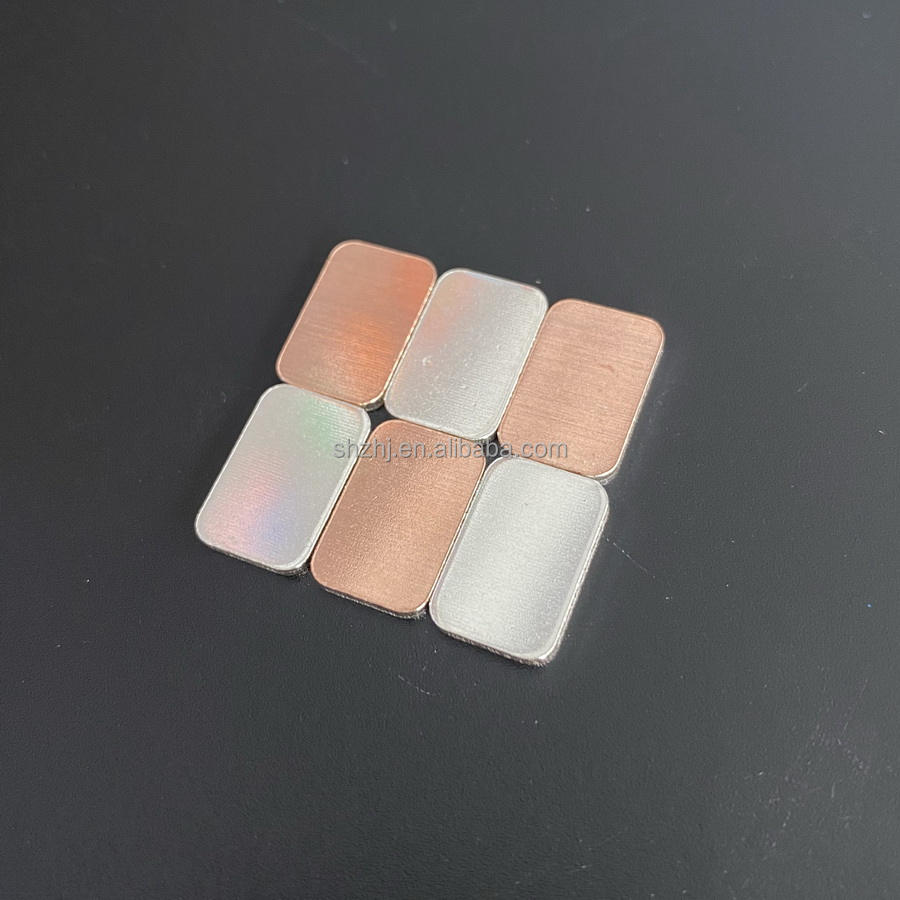
The aerospace industry operates under some of the most stringent reliability and performance requirements in the engineering world. In aircraft power distribution systems, particularly those utilizing high-voltage Direct Current (DC), the choice of electrical contact material can be the difference between mission success and catastrophic system failure. Among the various composite materials available, Silver Tungsten Carbide (AgWC) has emerged as a critical component for high-performance circuit breakers and relays in aerospace DC systems. This technical analysis explores the metallurgical properties of AgWC and its performance characteristics in demanding flight environments.

The Aerospace DC Environment: A Unique Challenge
Aerospace electrical systems must contend with factors that are rarely present in terrestrial applications: rapid temperature fluctuations (from -55°C to over 200°C), low atmospheric pressure at high altitudes, and intense vibration and shock. In DC systems, the lack of a zero-crossing point (unlike AC) means that arcs are much harder to extinguish. This prolonged arcing places immense thermal and mechanical stress on the contact surfaces, leading to rapid material erosion and potential welding. AgWC is specifically designed to withstand these conditions through its unique composite structure.
Why AgWC? Metallurgy and Material Properties
AgWC is a metal-matrix composite produced through powder metallurgy, typically involving the infiltration of silver into a porous skeleton of tungsten carbide. The resulting material combines the high electrical and thermal conductivity of silver with the exceptional hardness, high melting point, and wear resistance of tungsten carbide (WC). Unlike pure tungsten (W), tungsten carbide is more resistant to oxidation at high temperatures, which is a critical factor in maintaining stable contact resistance in aerospace relays that may operate in partially oxygenated environments.
Performance Under High-Current DC Loads
In aerospace DC systems, AgWC exhibits superior resistance to arc erosion compared to silver-nickel or silver-cadmium alloys. The WC particles act as a “thermal heat sink,” absorbing arc energy and preventing the large-scale melting of the silver phase. Furthermore, the high hardness of WC provides excellent resistance to “mechanical wear” during the repeated opening and closing cycles characteristic of aircraft circuit breakers. This ensures that the contact geometry remains stable over thousands of operations, which is vital for maintaining the calibration of protective devices.
Challenge: Managing Contact Resistance Stability
While AgWC is highly durable, it does face challenges regarding contact resistance. Over time, a thin layer of tungsten and silver oxides can form on the contact surface. At high altitudes with low humidity, these oxides can become quite hard and non-conductive. To mitigate this, aerospace engineers often specify high contact pressures and utilize “self-cleaning” contact designs that incorporate a wiping or rolling action. This mechanical action breaks through the oxide layer, ensuring a reliable metal-to-metal connection during every operation.
Comparison with Other Aerospace Contact Materials
| Material | Hardness (HV) | Erosion Resistance | Resistance Stability | Primary Application |
|---|---|---|---|---|
| AgNi 90/10 | Moderate | Moderate | Excellent | Low-Current Relays |
| AgW 50/50 | High | High | Moderate | High-Power Breakers |
| AgWC 50/50 | Very High | Superior | Stable (with wipe) | Aerospace DC Breakers |
Reliability and Maintenance in Aircraft Power Distribution
The use of AgWC allows for longer maintenance intervals in aircraft electrical systems. Because the material erodes so slowly and resists welding so effectively, circuit breakers can be designed with smaller “wear allowances,” leading to weight savings—a critical factor in aerospace design. However, periodic inspection is still required to monitor for signs of excessive oxidation or mechanical cracking of the WC skeleton, which could lead to increased heating or failure under fault conditions.
Conclusion: The Future of AgWC in Aerospace
As aerospace technology moves toward “More Electric Aircraft” (MEA) architectures, the demands on DC power distribution will only increase. Higher voltages and higher current densities will require even more robust contact materials. Silver Tungsten Carbide remains at the forefront of this evolution, providing a proven, high-reliability solution for the most demanding switching applications. By continuing to optimize the microstructure and manufacturing processes of AgWC, engineers can ensure that the next generation of aircraft is safer, more efficient, and more reliable than ever before.