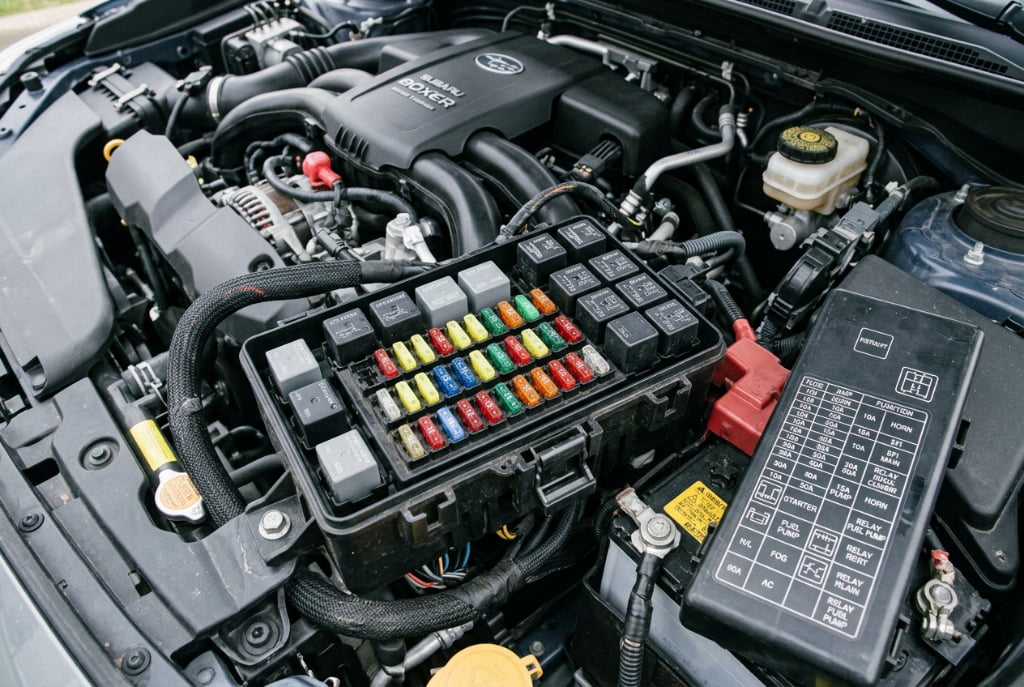
The automotive environment is one of the most demanding for electrical components. Between the extreme temperature fluctuations of the engine bay, the constant mechanical vibrations of the road, and the transition to 12V/24V DC systems with complex inductive loads, the choice of contact material is a matter of vehicle safety and longevity. Silver Nickel (AgNi) has long been the industry standard for automotive small-signal and power relays, prized for its unique grain structure and exceptional wear resistance.
The Microstructure of Silver Nickel
AgNi is a “pseudo-alloy,” meaning silver and nickel are not mutually soluble. Instead, the nickel exists as fine particles or fibers dispersed throughout the silver matrix. This structure is typically achieved through powder metallurgy.
The presence of nickel significantly improves the mechanical hardness of the contact. While pure silver is soft and prone to mechanical wear and “sticking,” the nickel particles act as a reinforcing skeleton. In automotive relays that may undergo millions of mechanical operations over the life of a vehicle, this hardness is essential to prevent the contacts from deforming or wearing down prematurely.
Performance in 12V and 24V DC Circuits
Unlike AC circuits, DC circuits do not have a zero-crossing to help extinguish the arc. In automotive systems, breaking a DC load (such as a fuel pump or a cooling fan) generates a persistent arc that can cause “fine” material transfer.
AgNi contacts are highly resistant to this type of erosion. The nickel particles help stabilize the arc and prevent the formation of large “pips” and “craters” on the contact surfaces. Specifically, AgNi10 (10% nickel) and AgNi20 (20% nickel) are the most common grades. AgNi10 offers higher conductivity for lower temperature rise, while AgNi20 provides enhanced anti-welding properties for higher-current loads.
Resistance to Vibration and Environmental Stress
Automotive relays are subjected to constant vibration and shock. This can cause “fretting corrosion” if the contact material is too soft or prone to oxidation. AgNi’s resistance to atmospheric oxidation is excellent. Even in the presence of humidity and sulfur, the contact surface remains relatively clean, ensuring a low and stable contact resistance.
Furthermore, the mechanical strength of the AgNi bond prevents the contact from “cracking” under the stress of high-frequency vibration. This is a critical advantage over more brittle materials like some oxide-based alloys in specific automotive sensing applications.
Versatility Across Automotive Applications
- Central Locking Systems: Where high mechanical life is required for thousands of lock/unlock cycles.
- Wiper Controls: Where the contacts must handle the inductive kickback of the wiper motor.
- Power Windows: Where compact relays must handle significant inrush currents without welding.
While AgSnO2 is becoming more common for very high-current “start-stop” systems, AgNi remains the preferred choice for the majority of the vehicle’s switching needs due to its balance of cost, conductivity, and durability.
Conclusion
Silver Nickel (AgNi) continues to be an essential material in the automotive engineer’s toolkit. Its ability to withstand the rigors of DC switching, combined with its mechanical toughness and stable electrical properties, ensures that the invisible “heart” of the vehicle’s electrical system—the relay—keeps beating for hundreds of thousands of miles.