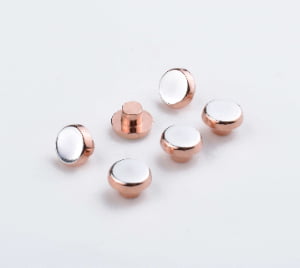
In the demanding landscape of electrical engineering, the selection of contact materials is a pivotal decision that determines the reliability, safety, and longevity of switching devices. For decades, Silver Cadmium Oxide (AgCdO) was the industry standard, prized for its excellent balance of conductivity and erosion resistance. However, the rise of stringent environmental regulations like RoHS and the push for higher performance in compact designs have propelled Silver Tin Oxide (AgSnO2) to the forefront. This technical deep-dive explores the performance benchmarks of AgSnO2 vs. AgCdO, highlighting the metallurgical advantages of tin oxide and why it has become the superior choice for high-load applications.
The Metallurgical Foundation: AgCdO vs. AgSnO2
Silver Cadmium Oxide (AgCdO) operates on the principle of internal oxidation, where cadmium oxide particles are dispersed within a silver matrix. These particles help in arc quenching and provide a level of weld resistance by disrupting the silver surface. However, cadmium is a heavy metal with significant environmental and health risks, leading to its restriction under RoHS (Restriction of Hazardous Substances) and REACH directives. This regulatory push was the initial driver for alternatives, but technical discoveries soon revealed that Silver Tin Oxide offered more than just compliance.
In contrast, Silver Tin Oxide (AgSnO2) utilizes tin oxide (SnO2) as the primary additive. Tin oxide is thermally more stable than cadmium oxide. While AgCdO begins to decompose and lose its efficacy at approximately 900°C, SnO2 remains stable at much higher temperatures, often exceeding 1600°C. This thermal stability is a double-edged sword: it provides superior arc erosion resistance but can lead to the formation of stable, non-conductive oxide layers. To mitigate this, modern AgSnO2 contacts are often alloyed with dopants like Indium Oxide (In2O3), which refine the microstructure and improve conductivity.
Performance Benchmark: Weld Resistance
Weld resistance is a critical parameter in high-inrush current applications, such as motor starters, capacitive loads, and lighting ballasts. When contacts close, the initial spark and bounce can cause localized melting. If the contact material does not have sufficient weld resistance, the silver matrix can fuse, causing the device to fail in the “on” position—a catastrophic failure in many industrial systems.
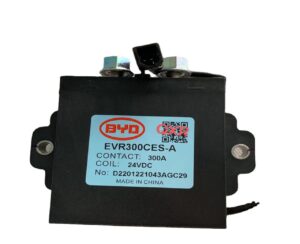
AgSnO2 exhibits significantly higher weld resistance compared to AgCdO. The SnO2 particles do not melt at the temperatures reached during a typical switching arc, creating a mechanical barrier that prevents the silver matrix from fusing across the contact interface. In comparative testing under high-load AC-3 conditions, AgSnO2 contacts often show 25-40% better resistance to dynamic welding during the “make” operations. This makes AgSnO2 the ideal choice for automotive power relays and heavy-duty industrial contactors that must handle high-surge currents without failing.
Arc Erosion and Material Transfer
Arc erosion refers to the gradual loss of contact material due to the intense heat of the electrical arc generated during “break” operations. AgCdO relies on the “self-cleaning” property of cadmium oxide, which vaporizes at relatively low temperatures to help quench the arc. However, this same property leads to faster material depletion and shorter electrical life.
AgSnO2, thanks to its superior thermal stability, undergoes significantly less material loss per switching cycle. The tin oxide remains at the contact surface, maintaining the integrity of the contact body. Furthermore, AgSnO2 shows superior performance in preventing material transfer (pitting and bridging) in DC circuits. In high-voltage DC applications, such as those found in modern electric vehicle (EV) charging systems and solar inverters, AgSnO2 maintains a more uniform surface topology. This prevents the formation of “spikes” and “craters” that eventually lead to mechanical sticking or dielectric failure.

Electrical Conductivity and % IACS Conductivity
Electrical conductivity is measured against the International Annealed Copper Standard (% IACS). Traditionally, AgCdO held a slight advantage here, with typical conductivity values ranging from 65% to 80% IACS. Standard AgSnO2 formulations were historically lower, often between 60% and 75% IACS, leading to concerns about temperature rise in continuous-duty applications.
However, advancements in powder metallurgy and internal oxidation processes have largely neutralized this gap. By controlling the particle size and distribution of the tin oxide, manufacturers can now produce AgSnO2 with conductivity levels that rival AgCdO. More importantly, the contact resistance of AgSnO2 is more stable over the component’s lifespan. While AgCdO resistance can fluctuate as the cadmium oxide is depleted and the silver matrix is compromised, AgSnO2 remains remarkably consistent, ensuring that the device operates within its thermal specifications even after millions of operations.
Industrial Applications and Reliability
The choice between AgSnO2 and AgCdO often comes down to the specific load profile. For resistive loads, AgCdO is still functional where RoHS is not a factor. However, for inductive and capacitive loads, AgSnO2 is almost universally preferred. Inductive loads, such as motors and solenoids, create intense arcs upon breaking, while capacitive loads create massive inrush currents upon making. In both scenarios, the metallurgical advantages of AgSnO2—high melting point tin oxide and superior microstructure—provide a safety margin that AgCdO simply cannot match.
Conclusion: The Future of Electrical Contacts
The transition from AgCdO to AgSnO2 is more than a regulatory requirement; it is a fundamental advancement in material science. With its superior weld resistance, lower arc erosion, and stable electrical properties, AgSnO2 has established itself as the new high-performance benchmark for the electrical industry. As we move toward a future of higher power densities and more demanding electrical environments, particularly in the EV and renewable energy sectors, the reliability provided by Silver Tin Oxide contacts will be the foundation of safe and efficient power distribution.