
As the world transitions to a hydrogen economy, the safety and reliability of hydrogen fuel cell vehicles and power plants have become paramount. In these systems, hydrogen fuel cell relays play a critical role in managing power distribution and safety isolation. However, operating in the presence of hydrogen—a highly flammable gas with a low ignition energy—requires a specialized approach to electrical contact design and spark management.

The Challenge of Hydrogen Ignition
Hydrogen has an exceptionally wide flammability range (4% to 75% in air) and a minimum ignition energy that is nearly ten times lower than that of gasoline or natural gas. Any spark generated at an electrical contact interface could potentially ignite a leak. This necessitates the use of hermetically sealed relays, often filled with inert gas like nitrogen or a hydrogen-suppressing gas mixture. However, the internal contacts themselves must also be engineered to minimize arcing energy.
Arc Quenching in Hydrogen Environments
To reduce the risk of localized ignition and prevent material degradation, hydrogen fuel cell relays utilize advanced arc quenching technologies. Silver Tin Oxide (AgSnO2) is the material of choice due to its high thermal stability and resistance to material transfer. For high-power applications, magnetic blowouts are used to physically “stretch” the arc, increasing its voltage and forcing it to extinguish faster. This minimizes the duration of the plasma state, reducing the thermal energy released into the relay enclosure.
Ensuring Low Contact Resistance and Stability
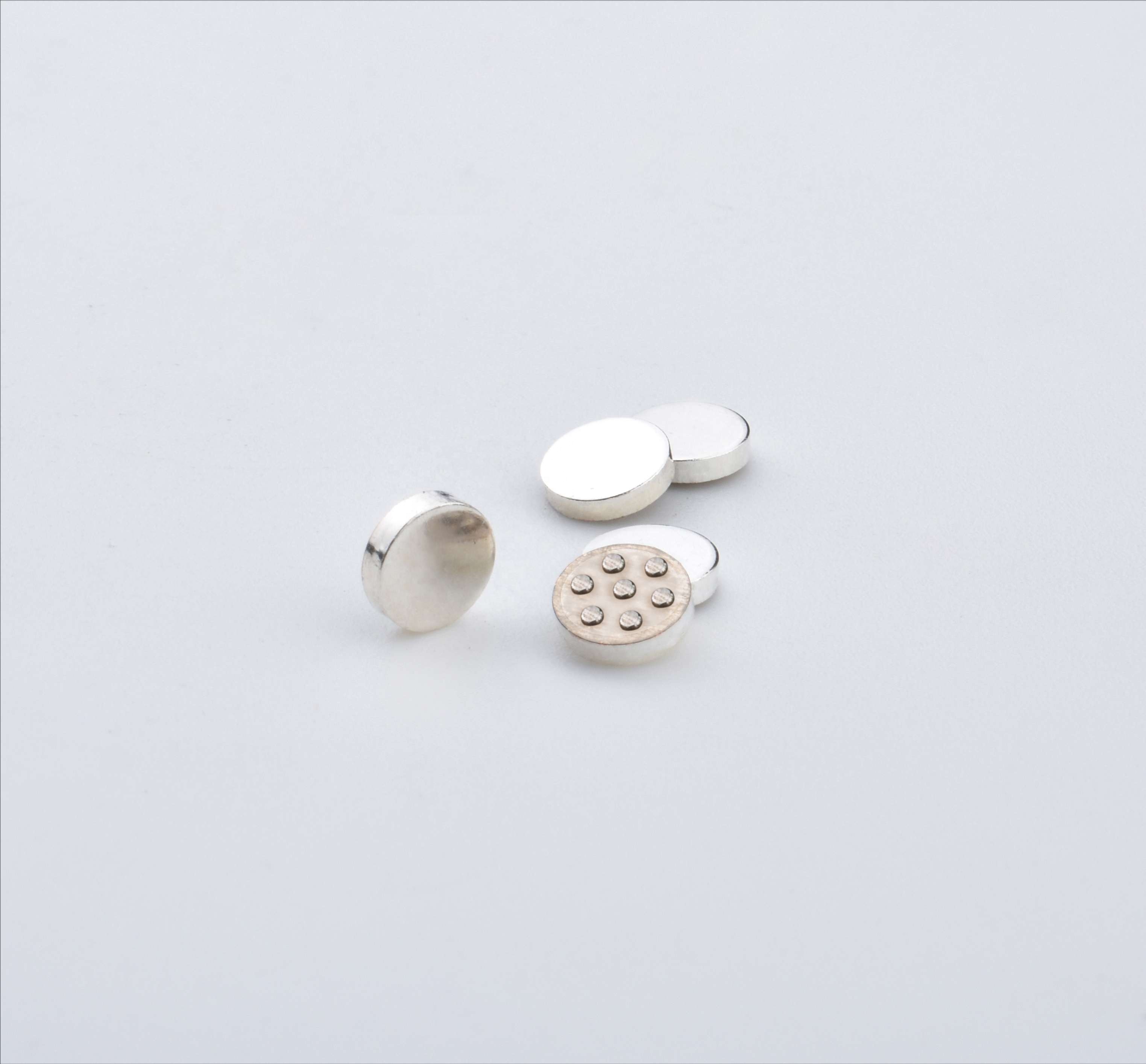
In fuel cell systems, high currents are common. Any significant contact resistance can lead to localized heating, which is dangerous in an explosive environment. We use bimetal rivets with oxygen-free copper shanks to provide maximum thermal conductivity, pulling heat away from the silver contact interface. Our precision cold-heading and finishing processes ensure a smooth surface profile (low Ra), which minimizes constriction resistance and ensures stable performance over thousands of switching cycles.
ATEX and IECEx Compliance for Electrical Contacts
Components used in hydrogen infrastructure must often comply with ATEX (Europe) and IECEx (Global) standards for explosive atmospheres. While the relay enclosure provides the primary protection, the silver contact rivets inside are critical to the overall reliability of the certified device. We provide full material traceability and performance data to support our customers’ efforts in achieving these essential safety certifications for their hydrogen fuel cell projects.
Conclusion
The hydrogen revolution is built on a foundation of safety. By understanding the unique challenges of explosive environments and prioritizing advanced arc-quenching materials, engineers can build fuel cell systems that are as safe as they are sustainable. At Contactrivets, we are committed to providing the specialized silver alloy solutions required for the hydrogen economy. Contact us today to learn how our high-performance contact rivets can enhance the safety and reliability of your fuel cell applications.