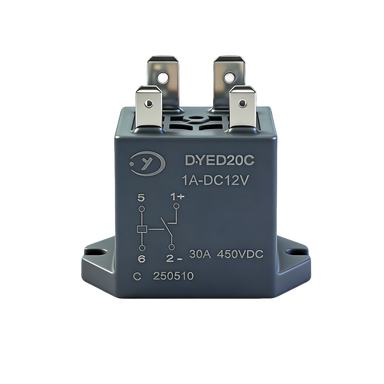

Utility-scale Battery Energy Storage Systems (BESS) are essential for stabilizing power grids reliant on intermittent renewable energy sources like wind and solar. These systems use massive battery arrays, managed by high-capacity DC contactors. For these contactors, the choice of electrical contact material—specifically Silver Tin Oxide (AgSnO2)—is the primary factor determining the system’s long-term reliability and maintenance intervals.
Long Cycle Life: The BESS Requirement

Unlike automotive applications, which may only see a few operations per day, utility-scale BESS contactors may cycle frequently as they respond to grid fluctuations. This necessitates an electrical life of hundreds of thousands of operations. AgSnO2 is uniquely suited for this due to its low material transfer rate in DC circuits. By optimizing the tin oxide content (typically between 8% and 12%), manufacturers can tailor the material’s hardness and conductivity to meet specific BESS duty cycles.
Thermal Stability and Resistance to Oxidation
BESS units are often installed in outdoor enclosures where ambient temperatures can vary significantly. The contact material must maintain low contact resistance even after thousands of hours at elevated temperatures. AgSnO2 is inherently more resistant to oxidation than traditional silver-nickel alloys. The oxide particles are evenly dispersed throughout the silver matrix, creating a surface that resists the formation of high-resistance insulating films. This ensures that the contactor maintains high efficiency (% IACS) over its entire service life.
Manufacturing Considerations: Internal Oxidation vs. Powder Metallurgy
For BESS applications, the manufacturing method of the AgSnO2 material significantly impacts its performance. Internal Oxidation typically produces a more uniform oxide distribution but can result in a “depletion zone” at the center of the wire. Powder Metallurgy (PM) allows for higher oxide concentrations and the addition of dopants like WO3 or Bi2O3 to improve arc quenching. For utility-scale BESS, PM-processed AgSnO2 is often preferred for its consistency and superior resistance to welding under high inrush currents.
Rivet Geometry and Contact Pressure
Optimizing the BESS contactor also requires attention to the physical design of the contact rivet. A spherical (domed) contact surface is often used to ensure a consistent contact point even if there is slight mechanical misalignment. Additionally, the contact pressure must be sufficient to break through any minor surface contaminants without causing excessive mechanical wear. Engineers must balance the spring force with the Vickers hardness of the silver alloy to prevent deformation over time.
Conclusion
As the world transitions to a greener grid, the demand for reliable BESS infrastructure will only grow. By optimizing AgSnO2 contact materials for long-term thermal stability and cycle life, engineers can ensure that energy storage systems remain a dependable component of our electrical infrastructure. At Contactrivets, we specialize in high-performance silver alloys for the energy storage sector. Contact us for technical assistance with your next BESS project.