In the world of printed circuit board (PCB) relays, silver and its alloys are the preferred contact materials due to their exceptional electrical conductivity. However, these materials are susceptible to a phenomenon known as silver migration—an electrochemical process that can compromise the insulation integrity of the relay and lead to device failure. Understanding the mechanisms of silver migration and implementing effective prevention strategies is critical for engineers designing high-reliability electronic systems.
What is Silver Migration?
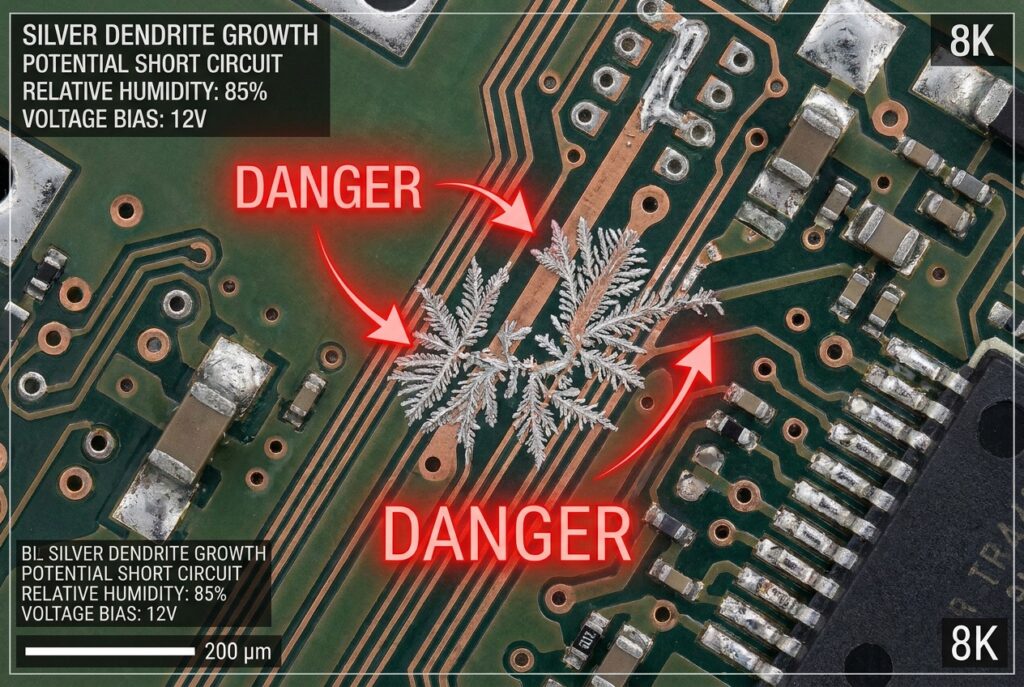
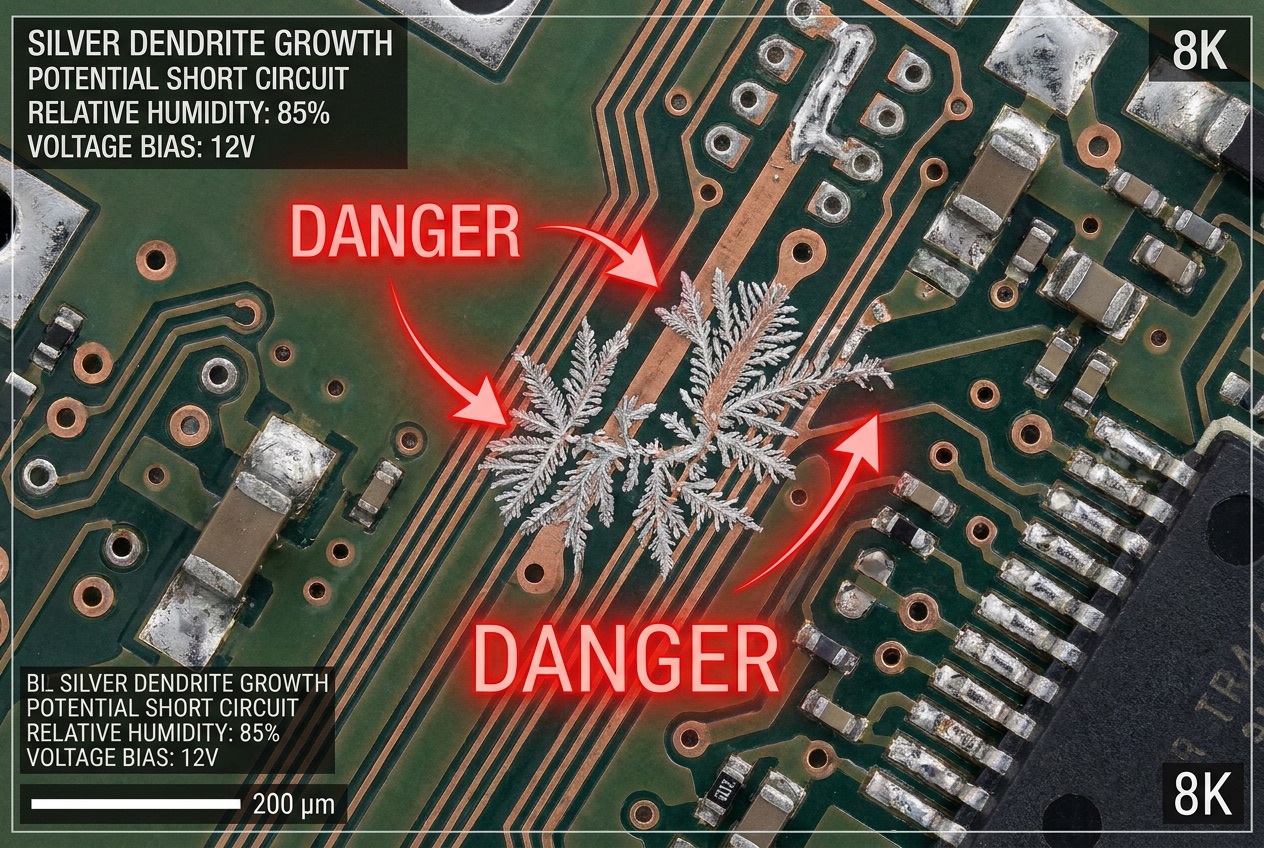
Silver migration occurs when silver ions (Ag+) are transported from a silver-containing conductor (the anode) to an adjacent conductor (the cathode) across an insulating surface. This process is driven by an electrical potential difference and is significantly accelerated by the presence of moisture or high humidity. As the ions move, they are reduced back to metallic silver at the cathode, forming tree-like structures called dendrites. These dendrites grow back toward the anode, eventually creating a conductive path that causes a short circuit.
Key Drivers of the Migration Process
Several environmental and electrical factors influence the rate and severity of silver migration in PCB relays. High relative humidity (typically above 60%) provides the necessary electrolyte for ion transport. The voltage gradient between conductors provides the driving force for ion movement. Additionally, temperatures above 40°C can increase ion mobility, further accelerating the process. In many industrial and automotive applications, these conditions are frequently encountered, making silver migration a primary concern for long-term reliability.
Dendritic Growth and Insulation Failure
The formation of silver dendrites is often a “silent” failure mode. The dendrites are extremely thin—often only a few micrometers in diameter—making them difficult to detect through visual inspection without high-magnification microscopy. Once a dendrite bridges the gap between contacts or traces, the insulation resistance drops precipitously. This can result in intermittent malfunctions, signal leakage, or a permanent hard short, depending on the current-carrying capacity of the dendrite and the circuit’s sensitivity.
Engineering Strategies for Prevention
Preventing silver migration requires a multi-faceted approach involving material selection, mechanical design, and surface protection. One common strategy is the use of silver alloys that incorporate elements like palladium (AgPd), which significantly reduces the rate of migration compared to pure silver. In terms of design, increasing the creepage and clearance distances between conductors can slow the progress of dendrites. Furthermore, applying conformal coatings or hermetically sealing the relay can prevent moisture from reaching the silver surfaces, effectively breaking the electrochemical circuit required for migration.
Testing for Migration Resistance
Reliability testing is essential for verifying the effectiveness of migration prevention measures. Standard tests, such as the Temperature-Humidity-Bias (THB) test, subject the relay to high humidity and temperature while applying a continuous voltage. By monitoring the insulation resistance over hundreds or thousands of hours, engineers can determine the expected life of the relay in its intended environment and identify potential weaknesses in the design or manufacturing process.
Conclusion
While silver remains an indispensable material for PCB relay contacts, its susceptibility to migration cannot be ignored. By understanding the electrochemical principles of dendritic growth and implementing robust design and material strategies, engineers can ensure that their systems remain reliable even in challenging environments. As electronic devices continue to shrink and power densities increase, the management of silver migration will remain a cornerstone of high-quality PCB relay engineering.