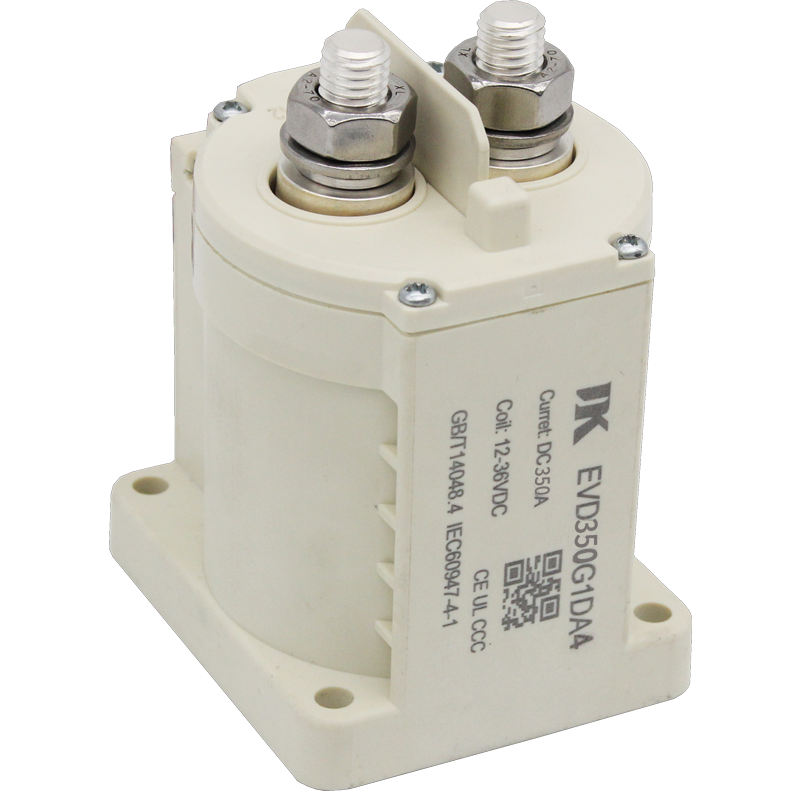
In the rapidly evolving landscape of industrial automation and power electronics, the demand for high-performance switching components has never been greater. At the heart of these components—particularly industrial contactors—lies the contact material, which must withstand extreme electrical and thermal stresses. Among the various materials developed for these applications, Silver Tin Oxide Indium Oxide (AgSnO₂In₂O₃) has emerged as a premier choice for high-frequency switching. This alloy’s unique metallurgical properties, characterized by the dispersion of tin oxide and indium oxide particles within a silver matrix, provide a sophisticated solution to the challenges of arc erosion, contact welding, and material transfer.
The Compositional Advantage: Why Indium Oxide?
Silver tin oxide (AgSnO₂) was originally developed as an environmentally friendly alternative to silver cadmium oxide (AgCdO). While AgSnO₂ offered superior resistance to welding and erosion in many applications, it initially faced challenges with increased contact resistance over time due to the formation of insulating oxide layers. The introduction of Indium Oxide (In₂O₃) as a dopant revolutionized this material class. In AgSnO₂In₂O₃, the indium oxide serves several critical functions. First, it modifies the microstructure of the tin oxide particles, ensuring a more uniform dispersion throughout the silver matrix. This uniformity is essential for maintaining consistent electrical properties across the contact surface. Second, indium oxide enhances the wettability of the oxide particles within the molten silver during an arc event, preventing the segregation of oxides and reducing the tendency for the material to become brittle.
Arc Mobility and Erosion Resistance
In high-frequency industrial contactors, the contacts may open and close thousands of times per hour. Each switching event generates an electric arc, which can reach temperatures high enough to vaporize the contact material. AgSnO₂In₂O₃ is specifically engineered to promote “arc mobility.” When an arc is formed, the présence of the oxide particles creates a complex surface topography that encourages the arc root to move rapidly across the contact surface rather than anchoring in one spot. This rapid movement distributes the thermal energy more evenly, significantly reducing localized melting and subsequent erosion. Furthermore, the tin oxide and indium oxide particles have high decomposition temperatures and low vapor pressures, which means they remain stable even in the presence of intense arcs, providing a durable skeleton that maintains the contact’s integrity.
Thermal Stability and Contact Resistance
One of the primary requirements for industrial contactors is low and stable contact resistance. High resistance leads to excessive heating, which can eventually result in contact welding or failure of the contactor housing. AgSnO₂In₂O₃ excels in this area due to its superior thermal stability. Unlike some other oxide-dispersed materials, AgSnO₂In₂O₃ resists the formation of a continuous, high-resistance oxide film on the surface. The synergistic effect between SnO₂ and In₂O₃ ensures that as the silver matrix melts and refreezes during operation, the oxides are redistributed in a way that preserves electrical pathways. This stability is particularly crucial in high-frequency applications where the short time between switching cycles provides little opportunity for the contacts to cool down significantly.

Metallurgical Processing: Powder Metallurgy vs. Internal Oxidation
The performance of AgSnO₂In₂O₃ contacts is heavily dependent on the manufacturing process. Most high-quality industrial contacts are produced via powder metallurgy. This involves mixing fine silver, tin oxide, and indium oxide powders, followed by pressing, sintering, and often an extrusion or rolling step to achieve full density and the desired microstructure. This process allows for precise control over the oxide content and particle size, typically ranging from 10% to 14% oxide by weight. Alternative methods, such as internal oxidation of silver-tin-indium alloys, can also be used but may result in a non-uniform distribution of oxides, particularly in thicker contacts. For high-frequency contactors, the powder metallurgy route is generally preferred for its consistency and superior arc-handling capabilities.
Performance in AC-3 and AC-4 Applications
Industrial contactors are often rated for specific utilization categories, such as AC-3 (starting squirrel-cage motors) and AC-4 (plugging or inching). AC-4 applications are particularly demanding as they involve breaking high currents at high frequencies, leading to intense arcing. AgSnO₂In₂O₃ has proven to be exceptionally effective in AC-4 conditions. Its ability to resist welding even when the contacts are closed onto a high inrush current, combined with its high erosion resistance when breaking the circuit, makes it the material of choice for heavy-duty industrial switchgear. Studies have shown that AgSnO₂In₂O₃ contacts can outlast traditional AgCdO contacts by a significant margin in these high-stress environments.
Conclusion
In conclusion, AgSnO₂In₂O₃ is more than just a contact material; it is a highly engineered metallurgical solution tailored for the most demanding industrial applications. Its unique combination of arc mobility, thermal stability, and low contact resistance makes it indispensable for high-frequency contactors. As industrial systems continue to push for higher efficiency and reliability, the role of advanced materials like AgSnO₂In₂O₃ will only become more critical. By understanding the underlying science of these contacts, engineers can design more robust and longer-lasting electrical systems that meet the challenges of the modern industrial age.