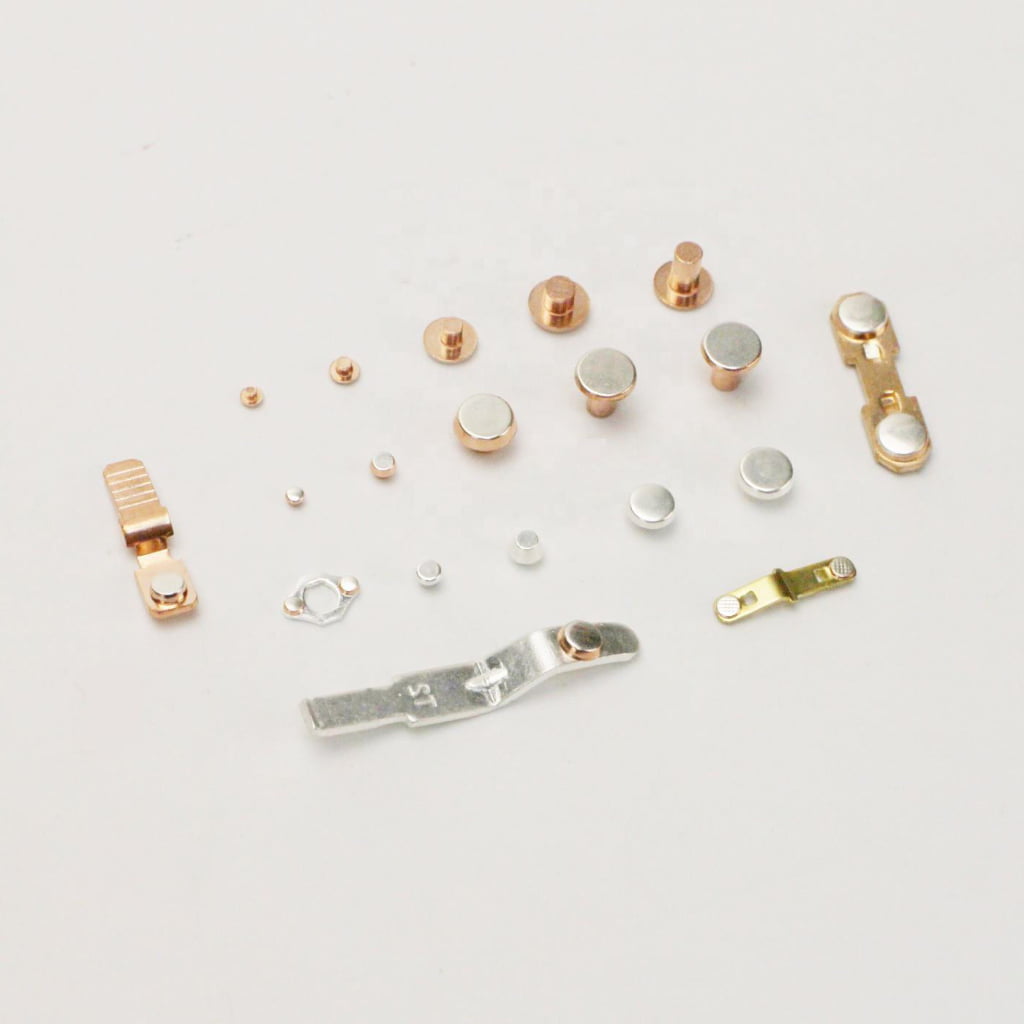

In the high-stakes world of electrical engineering, the choice of contact material is often the thin line between a reliable system and a catastrophic failure. From low-current relays in smart homes to high-voltage circuit breakers in industrial grids, the material properties—conductivity, hardness, arc erosion resistance, and weld resistance—must be perfectly matched to the application. This guide provides a technical overview of the most critical silver alloy contact materials used in modern industry.
1. The Foundation: Pure Silver and Simple Alloys
The journey of electrical contact materials begins with Ag (Fine Silver). Renowned for its unparalleled electrical and thermal conductivity, pure silver is the gold standard for low-current applications where contact resistance must be kept to a absolute minimum. However, its low hardness and susceptibility to mechanical wear often necessitate alloying.
AgCu (Silver Copper) is a popular choice for improving mechanical strength without significantly sacrificing conductivity. It is frequently used in light-duty switches and thermostats. For applications requiring a balance of cost and performance, AgNi (Silver Nickel) offers excellent resistance to material transfer and is a staple in domestic appliances and automotive relays. In more demanding environments, AgCuNi (Silver Copper Nickel) provides enhanced corrosion resistance and stability.
2. Overcoming Arc Erosion: Metal Oxide Materials
When switching high-load currents, arc erosion and welding become the primary failure modes. Metal oxide dispersed materials are engineered to tackle these challenges.
Traditionally, AgCdO (Silver Cadmium Oxide) was the industry workhorse due to its exceptional anti-welding properties and low contact resistance. However, environmental regulations like RoHS have pushed the industry toward safer alternatives.
AgSnO2 (Silver Tin Oxide), also referred to as AgSnO, has emerged as the premier eco-friendly alternative. It outperforms AgCdO in many high-power DC applications, offering superior thermal stability. To further refine its performance, manufacturers often add dopants, leading to advanced materials like AgSnO₂In₂O₃ (Silver Tin Oxide Indium Oxide), which provides even better arc mobility and electrical life in heavy-duty contactors.
Other variants include AgZnO (Silver Zinc Oxide), which is particularly effective in circuit breakers where high-current quenching is required.
3. High-Voltage Performance: Refractory Metal Composites
For the most demanding applications involving high-voltage DC and extreme arc temperatures, silver-based composites with refractory metals like Tungsten (W) or Molybdenum (Mo) are essential.
AgW (Silver Tungsten) and AgWC (Silver Tungsten Carbide) are designed for heavy-duty switchgear and circuit breakers. They combine the high conductivity of silver with the extreme melting points of tungsten. AgWCC (Silver Tungsten Carbide Carbon) variants add carbon to further reduce the risk of sticking and welding during high-current fault conditions.
In high-power electronics and heavy machinery, CuW (Copper Tungsten) is often used for its robust thermal properties, while AgMo (Silver Molybdenum) serves as an alternative where specific material transfer characteristics are needed.
4. Specialized Low-Resistance Materials
For applications requiring ultra-low and stable contact resistance over time, AgC (Silver Graphite) is often employed. The inclusion of graphite provides a self-lubricating property that prevents mechanical sticking, making it ideal for precision instruments.
Conclusion: Matching Material to Load
Selecting the right material is a multi-dimensional optimization problem. Whether you are designing an EV charging station requiring the robustness of AgSnO₂ or a precision relay benefiting from AgNi, understanding the metallurgical nuances of these alloys is key.
At ContactRivets.com, we specialize in the precision manufacturing of these advanced materials, ensuring that your electrical components achieve their maximum potential in life and reliability.