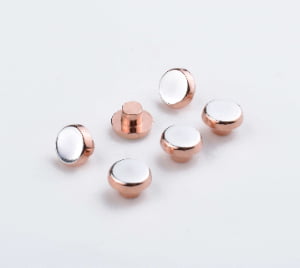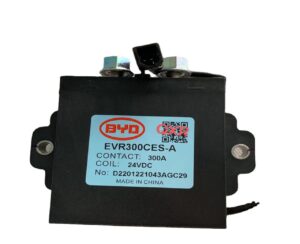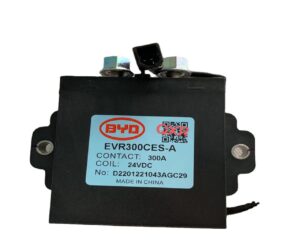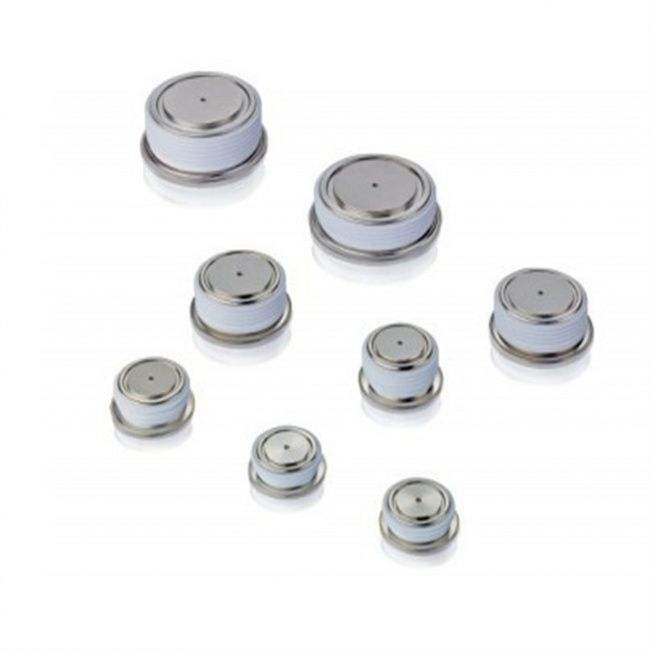
In the demanding environment of high-voltage electrical distribution, the choice of contact materials is critical for ensuring system reliability and safety. Silver Tungsten (AgW) and Silver Tungsten Carbide (AgWC) stand out as the premier solutions for applications requiring extreme resistance to arc erosion and mechanical wear. This technical analysis explores why these interpenetrating structure materials are indispensable in high-voltage breakers and heavy-duty switchgear.

The Interpenetrating Structure: A Powder Metallurgy Marvel
Silver Tungsten is not a traditional alloy in the metallurgical sense. Because silver and tungsten have virtually no mutual solubility, they cannot be melted together to form a uniform solid solution. Instead, AgW is produced through powder metallurgy—specifically, a process called infiltration. In this method, a porous “skeleton” of tungsten is first pressed and sintered. Molten silver is then drawn into the pores of this skeleton by capillary action.
The result is an interpenetrating structure where both phases—the silver and the tungsten—form a continuous network. This unique microstructural arrangement allows the material to inherit the best properties of both constituents. The tungsten skeleton provides the structural integrity and resistance to the mechanical stresses of high-speed switching, while the silver network ensures the high electrical and thermal conductivity necessary to carry massive currents without overheating. This “two-phase” architecture ensures that the composite remains functional even when subjected to thermal cycles that would cause alloy segregation in other materials.
Why Tungsten? The Role of High Melting Point
The primary challenge in high-voltage switching is the electrical arc. When breaker contacts separate under load, the air between them ionizes, creating a plasma arc with temperatures that can exceed 10,000 Kelvin. Most common metals, including copper and even pure silver, would vaporize instantly under such conditions. Tungsten, however, has the highest melting point of all metals at 3,422°C (6,192°F).
Within the AgW composite, the tungsten skeleton remains solid during the arcing event. It acts as a physical barrier that prevents the contact from melting away or losing its geometric profile. This dimensional stability is vital for circuit breakers that must operate reliably over thousands of cycles. Without the tungsten reinforcement, the contact surfaces would quickly become pitted and uneven, leading to increased contact resistance and eventual failure. Furthermore, the tungsten provides a high level of hardness (typically 150-250 HB depending on the silver content), which protects the contact from the mechanical impact of the high-speed closing mechanisms found in modern switchgear.
Arc Erosion Resistance and the Wicking Effect
Arc erosion is the gradual loss of material from the contact surface due to vaporization and sputtering during arcing. Silver Tungsten manages this through a fascinating “wicking” mechanism. As the arc heats the surface, a small amount of the silver phase melts and evaporates. This evaporation process absorbs a significant amount of latent heat, effectively cooling the contact surface and protecting the tungsten skeleton. The porous nature of the tungsten then “wicking” more silver from the interior to the surface, maintaining a conductive film that helps quench the arc more efficiently. This self-cooling and self-repairing nature is what gives AgW its superior longevity compared to homogeneous alloys.
AgW vs. AgWC: When to Choose Tungsten Carbide
While Silver Tungsten (AgW) is the standard for most applications, Silver Tungsten Carbide (AgWC) is used when even greater hardness and anti-welding properties are required. Tungsten carbide is significantly harder than pure tungsten, making AgWC contacts highly resistant to mechanical deformation under high contact pressures.
In heavy-duty circuit breakers, AgWC is frequently employed for the arcing contacts (the contacts that take the brunt of the arc during opening and closing), while the main current-carrying contacts might use AgW or Silver-Nickel. The carbide version is particularly effective at preventing “weld-on,” a failure mode where the heat of the arc causes the two contacts to fuse together. The presence of carbon in the form of carbide modifies the surface chemistry, making it harder for a permanent metallic bond to form during a fault event. However, engineers must balance this against the slightly higher electrical resistance of AgWC compared to AgW.
Technical Specifications and Material Selection
Selecting the right grade of Silver Tungsten requires a deep understanding of the specific application’s electrical and mechanical loads. Typical compositions range from 50/50 AgW to 80/20 AgW. A higher silver content increases electrical conductivity but reduces hardness and arc resistance. Conversely, a higher tungsten content maximizes the lifespan of the contact in high-energy arcing environments but increases the temperature rise during steady-state operation. Manufacturers often specify these materials based on density, hardness, and IACS (International Annealed Copper Standard) conductivity to ensure they meet the rigorous requirements of international standards like IEC and ANSI.
Applications in High-Voltage Breakers
The unique properties of AgW and AgWC make them the materials of choice for a wide range of heavy-duty electrical components:
- Air Circuit Breakers (ACB): These are used in the main power distribution for large buildings and industrial plants. They must handle currents up to 6,300A and withstand severe short circuits that generate immense thermal and magnetic forces. AgW ensures these breakers can clear a fault and remain ready for service.
- Molded Case Circuit Breakers (MCCB): AgW is used in the higher-rated versions of these breakers (typically above 250A) to provide the necessary arc resistance in a compact footprint.
- Heavy-Duty Industrial Contactors: Motor starters for large industrial pumps and compressors rely on AgW to handle the high inrush currents of large inductive loads, which can be 6-10 times the rated operating current.
- Resistance Welding Electrodes: Beyond switching, the high hardness and thermal conductivity of AgW make it ideal for the tips of welding machines where it must withstand both high heat and constant mechanical pounding.
Optimizing Performance for Modern Grids
As modern electrical grids transition toward more decentralized and renewable energy sources, the stresses on switchgear are increasing. Frequent switching of solar and wind assets, along with the integration of energy storage systems, requires contacts that can handle variable loads and higher cycle counts. Silver Tungsten and AgWC continue to evolve with improved powder metallurgy techniques, such as nanostructured powders and advanced vacuum sintering cycles, to meet these 21st-century challenges. These advancements result in a more uniform distribution of the silver phase, further reducing material transfer and extending the maintenance intervals for critical infrastructure.
Conclusion
For engineers and manufacturers in the power sector, Silver Tungsten and Silver Tungsten Carbide represent the pinnacle of contact material science. By combining the refractory strength of tungsten with the electrical brilliance of silver through an interpenetrating structure, these materials provide the extreme resistance necessary for high-voltage breakers to protect our global energy infrastructure. Choosing the right grade of AgW or AgWC is not just a technical detail; it is a fundamental requirement for the safety, stability, and reliability of the modern world’s power systems.