In the rapidly evolving landscape of power electronics, the ability to manage heat effectively is the single most important factor in determining the performance, reliability, and lifespan of semiconductor devices. As power densities continue to climb in everything from electric vehicle inverters to high-frequency telecommunications equipment, traditional thermal materials like pure copper or aluminum are often found wanting. Copper Tungsten (CuW) has stepped in as the critical material solution, offering a unique combination of high thermal conductivity, high melting point, and a tailorable coefficient of thermal expansion. This technical analysis explores why CuW is the backbone of modern thermal management and arc resistance in power electronics.

The Synergy of Copper and Tungsten: Best of Both Worlds
Copper Tungsten is a pseudo-alloy—a composite material that combines the desirable properties of its two constituent elements. Copper, with its exceptional thermal conductivity (approx. 400 W/m·K), is the primary heat-transfer agent. Tungsten, on the other hand, brings remarkable mechanical strength, a high melting point (3,422°C), and a very low coefficient of thermal expansion (CTE). By combining these two in various ratios (typically ranging from 10% to 50% copper), manufacturers can create a material that is both a thermal “superhighway” and a structural “rock.”
Thermal Management: Solving the Heat Dissipation Challenge
In power electronics, heat is the enemy. Excessive junction temperatures in transistors and diodes lead to thermal runaway and catastrophic device failure. Copper Tungsten serves as an ideal heat sink or heat spreader material. Its high thermal conductivity allows it to rapidly pull heat away from the sensitive semiconductor die and distribute it across a larger surface area where it can be dissipated by air or liquid cooling. Unlike pure copper, which can soften at high temperatures, the tungsten skeleton in CuW ensures that the heat spreader maintains its flatness and structural integrity even under extreme thermal loads, ensuring consistent contact with the device.
CTE Matching: Preventing Mechanical Stress in Semiconductors
Perhaps the most critical advantage of Copper Tungsten in electronics packaging is its tailorable Coefficient of Thermal Expansion (CTE). Semiconductors like Silicon (Si) and Gallium Nitride (GaN) have relatively low CTEs (around 3-5 ppm/°C), while pure copper has a high CTE (around 17 ppm/°C). When these materials are bonded together and subjected to thermal cycling, the difference in expansion rates creates massive mechanical stresses that can crack the semiconductor die or cause the solder joint to delaminate.
By adjusting the ratio of tungsten to copper, engineers can match the CTE of the CuW substrate to that of the semiconductor or the ceramic package (like Alumina or Aluminum Nitride). This “CTE matching” drastically reduces thermal fatigue and extends the operational life of the power module, making CuW indispensable for aerospace, automotive, and military applications where reliability is non-negotiable.
Arc Resistance: Protecting High-Power Switchgear
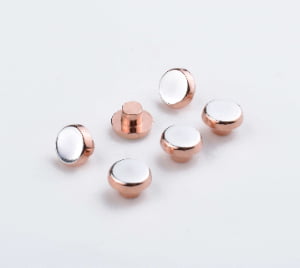
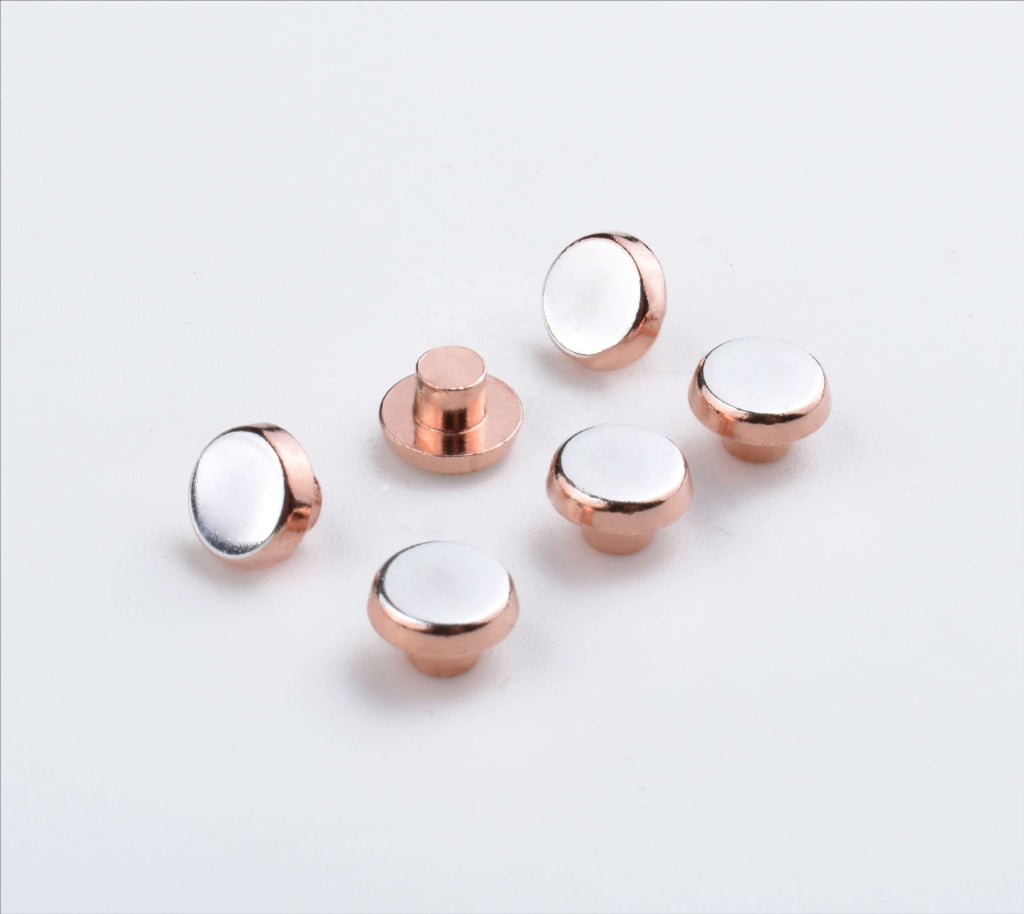
Beyond its thermal management capabilities, Copper Tungsten is also a premier contact material for high-power switching. In applications like vacuum circuit breakers and SF6 switchgear, the material must withstand the intense heat and mechanical erosion of an electrical arc. The tungsten skeleton provides the necessary refractory properties to resist melting and vaporization, while the copper phase ensures that the contact maintains low electrical resistance during steady-state operation. This combination prevents the contacts from welding together and ensures a long service life even under frequent fault-clearing operations.
Key Applications in Modern Technology
The versatility of CuW leads to its use in a wide range of cutting-edge applications:
- Electric Vehicle (EV) Inverters: CuW heat spreaders help manage the intense heat generated by high-speed switching in EV motor controllers.
- RF and Microwave Packages: In telecommunications infrastructure, CuW provides the thermal and electrical grounding necessary for high-power transistors.
- Laser Diode Mounts: The stability and thermal performance of CuW are essential for maintaining the alignment and wavelength of high-power industrial lasers.
- Medical Equipment: X-ray tubes and MRI machines rely on CuW for its combination of thermal management and high-density radiation shielding properties.
Manufacturing the Composite: The Infiltration Method
The highest quality Copper Tungsten is produced using the infiltration method. In this process, high-purity tungsten powder is pressed and sintered into a porous block. Molten copper is then introduced in a vacuum or hydrogen furnace, where it “infiltrates” the tungsten skeleton via capillary action. This ensures a fully dense, pore-free composite with a uniform distribution of both phases. This metallurgical precision is what allows CuW to achieve its world-class thermal and mechanical performance.
Conclusion: The Future of Power Electronics
As the world transitions to a more sustainable energy future, the role of power electronics will only grow. From the smart grids managing renewable energy to the electric vehicles on our roads, the efficient management of heat is a fundamental requirement. Copper Tungsten (CuW) remains at the forefront of this technological revolution, providing the thermal stability, expansion matching, and arc resistance necessary to push the boundaries of what is possible. For engineers designing the next generation of high-power systems, CuW is not just a material choice—it is a critical enabler of innovation.