The electric vehicle industry is rapidly adopting Silicon Carbide (SiC) inverters to improve efficiency and range. SiC technology allows for higher switching frequencies and higher operating temperatures, which in turn places new stresses on the mechanical connections within the inverter. For EV inverter contact rivets, the performance under these high-frequency, high-current conditions is critical to the longevity of the drivetrain.

The High-Frequency Challenge
SiC inverters switch current at much higher frequencies than traditional silicon-based IGBTs. This can lead to increased heating due to the skin effect and proximity effect within the electrical contacts. Every milliohm of resistance becomes a significant source of thermal stress. The contact rivets must be made of materials with the highest possible electrical and thermal conductivity to prevent the localized “hot spots” that can lead to material annealing and failure.
Bimetal Rivets: Maximum Thermal Dissipation
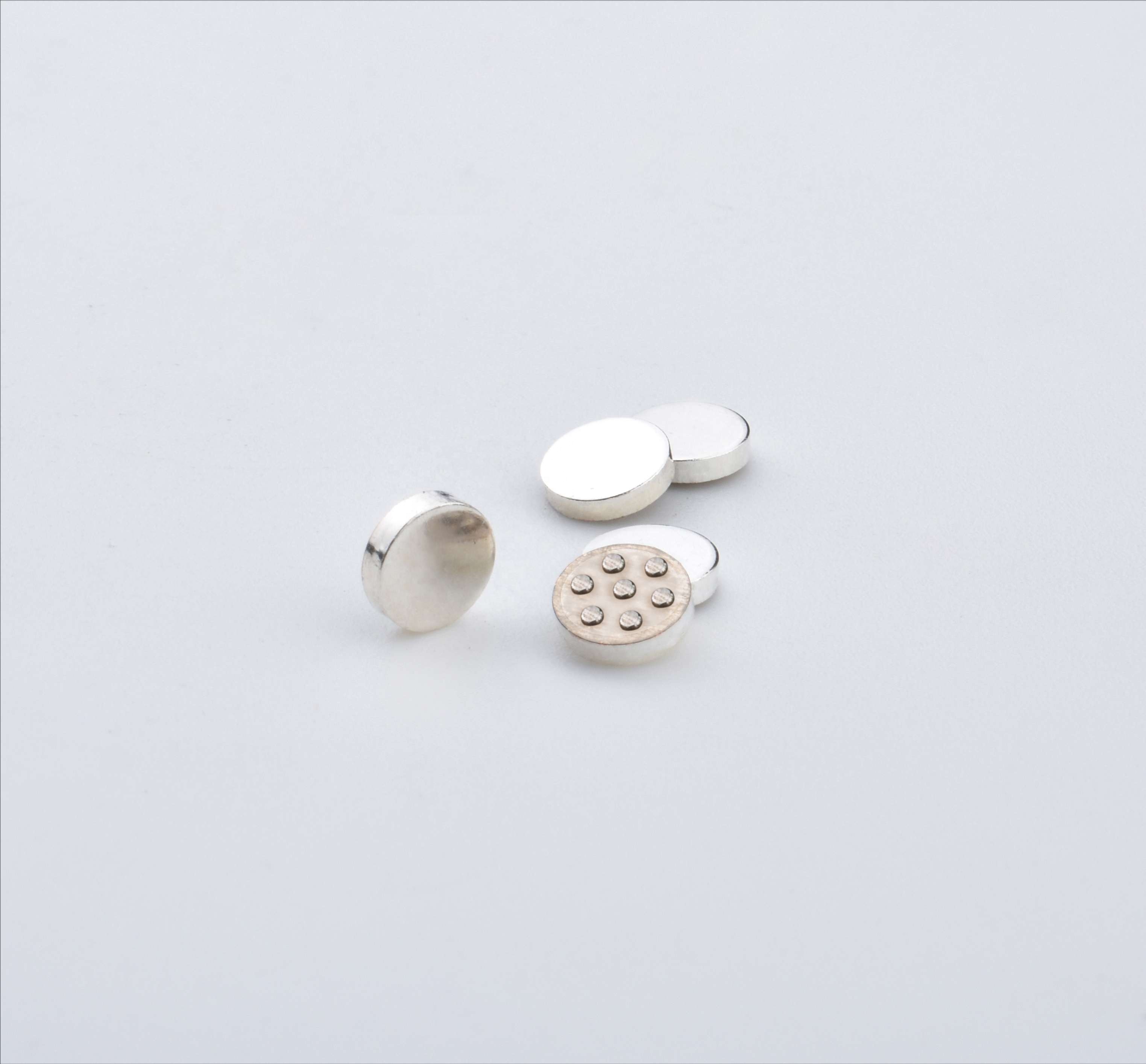
In high-current SiC inverters, the thermal dissipation capacity of the contact is paramount. Bimetal rivets (silver alloy face on a copper shank) are the ideal solution. The copper shank acts as a high-efficiency heat pipe, pulling thermal energy away from the switching interface and into the busbar or cooling plate. At Contactrivets, we use specialized oxygen-free copper (OFC) for our shanks, ensuring a thermal conductivity of approx. 390 W/m·K for maximum heat removal.
Material Stability at High Temperatures
SiC inverters can operate at temperatures exceeding 150°C. The contact material—typically AgSnO2 or AgNi—must maintain its Vickers hardness and mechanical integrity at these levels. If the material softens, the contact pressure can drop, leading to a runaway increase in contact resistance. Our materials are engineered with specialized dopants that refine the grain structure and improve thermal stability, ensuring consistent performance throughout the vehicle’s life.
Ensuring Low Contact Resistance (Rc)
For SiC applications, we target a contact resistance of less than 20 micro-ohms. This requires not only high-purity materials but also precision surface finishing. We use automated polishing and cleaning processes to achieve a mirrored finish (low Ra), which maximizes the true electrical contact area (a-spots). By minimizing the initial resistance, we reduce the total thermal load on the inverter module, contributing to the overall efficiency of the EV drivetrain.
Conclusion
The SiC revolution is pushing the limits of power electronics. By choosing high-performance bimetal contact rivets and prioritizing thermal management, engineers can build EV inverters that are both more efficient and more durable. At Contactrivets, we are a leading supplier of high-current contact solutions for the global EV market. Contact our technical team today for a detailed performance analysis and learn how our advanced silver alloys can power your next SiC inverter project.