
Additive manufacturing, or 3D printing, has revolutionized industries from aerospace to medicine. Now, this technology is beginning to impact the field of electrical engineering. The prospect of 3D printed electrical contacts offers the potential for unprecedented levels of customization and complexity in switch and relay design. However, while the potential is vast, the journey from traditional cold-heading to advanced 3D printing is filled with technical challenges.

The Current Status of 3D Printing in Electronics
Today, 3D printing is primarily used for prototyping and the manufacture of low-volume, high-complexity components. For electrical contacts, technologies like Selective Laser Melting (SLM) and Binder Jetting allow for the creation of silver and copper parts with intricate geometries that would be impossible to achieve with traditional machining or cold-heading. This opens up new possibilities for integrated thermal management and optimized current paths within a single component.
The Technical Challenges of Printed Silver Alloys
Despite the potential, 3D printing electrical-grade silver alloys like AgSnO2 presents significant hurdles. Achieving the necessary % IACS conductivity and density is difficult with current powder-based technologies. Porosity in the printed part can lead to high contact resistance and localized heating. Furthermore, maintaining a uniform dispersion of oxide particles (essential for arc erosion resistance) during the laser melting process requires sophisticated control of the manufacturing environment.
Potential for Customized Contact Microstructures
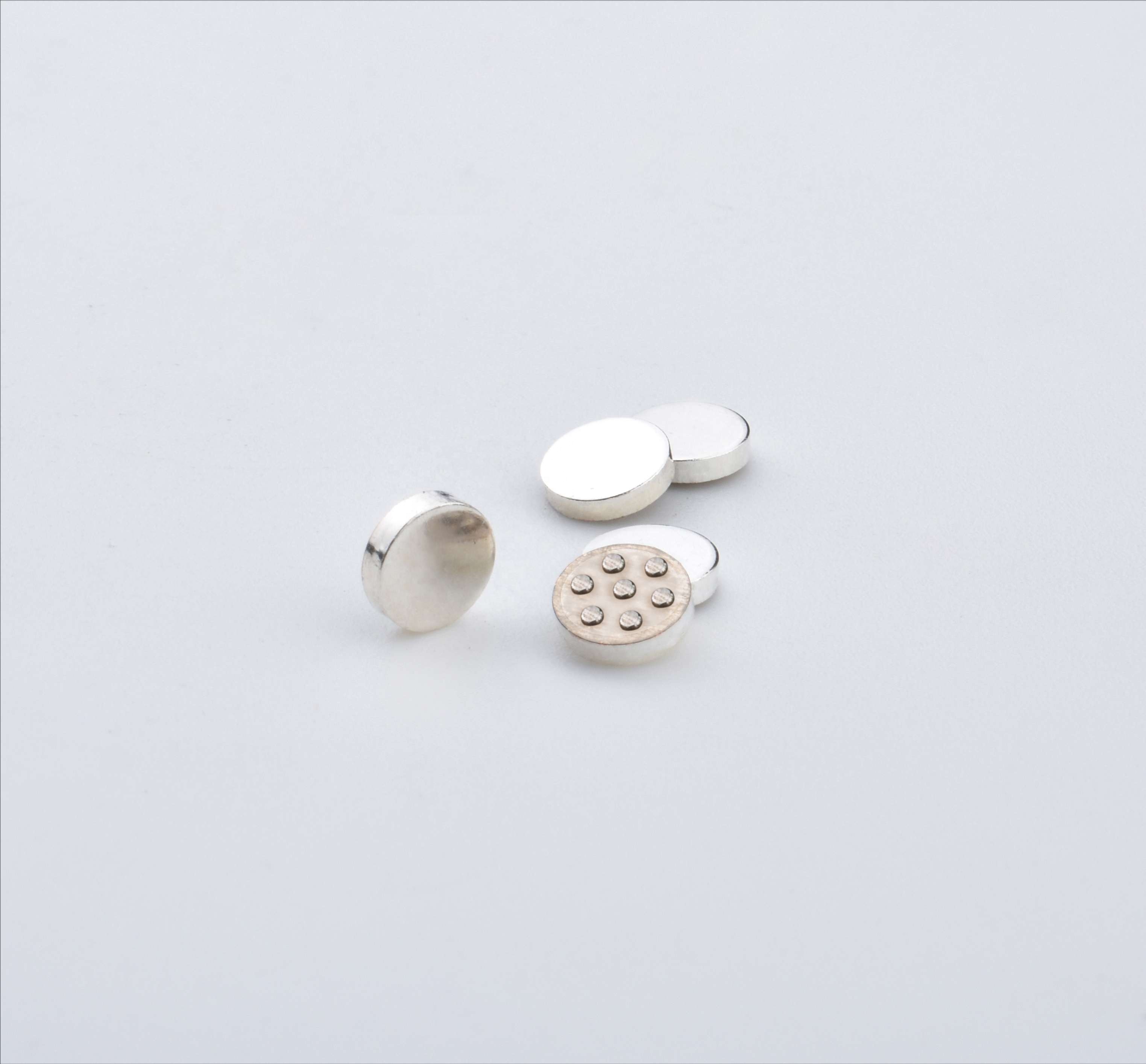
One of the most exciting aspects of 3D printing is the ability to engineer the material’s microstructure at a granular level. We could potentially “print” different alloy compositions in different parts of a single contact rivet—for example, a high-conductivity pure silver core with an arc-resistant AgSnO2 skin. This level of customization could lead to contacts with vastly superior performance and efficiency compared to anything available today.
The Role of Hybrid Manufacturing
As we move toward the 2030s, we expect to see more “hybrid” manufacturing approaches. This might involve using traditional cold-heading for the bulk of the bimetal rivet and then using additive manufacturing to “print” a specialized silver alloy or dopant layer onto the contact face. This would combine the speed and cost-efficiency of traditional methods with the precision and customization of 3D printing. At Contactrivets, we are actively researching these future technologies to ensure we remain at the forefront of the industry.
Conclusion
3D printed electrical contacts are the next frontier in power electronics. While significant challenges remain in terms of conductivity and density, the potential for customized, high-performance designs is undeniable. As additive manufacturing technology matures, it will undoubtedly play an increasingly important role in the manufacture of the switches and relays that power our world. Contact our engineering team today to learn more about our ongoing research into advanced manufacturing and the future of silver-based contact materials.