The modernization of the electrical grid into a “Smart Grid” requires a new generation of switching technology. As the grid incorporates more renewable energy and decentralized storage, the frequency and complexity of switching operations increase. Advanced AgZnO (Silver Zinc Oxide) contactors are playing a vital role in this transformation, providing the reliability and stability required for a 21st-century power network.
Why AgZnO for Smart Grid Applications?

For many years, Silver Tin Oxide (AgSnO2) has been the preferred RoHS-compliant material for high-power switching. However, for specific grid applications like capacitive load switching and AC-3/AC-4 duty cycles, Silver Zinc Oxide (AgZnO) offers unique advantages. AgZnO has exceptional arc-quenching capabilities and a high resistance to material transfer. This makes it ideal for the frequent switching operations required in smart meter disconnects and grid-tie inverters.
Improving Grid Stability through Reliability
A smart grid is only as stable as its weakest link. If a contactor fails to operate or welds shut during a load-balancing operation, it can lead to localized instability or outages. AgZnO materials manufactured via powder metallurgy offer a uniform microstructure that resists localized melting and welding. This ensures that the contactor can reliably interrupt currents even under the fluctuating voltages and frequencies common in modern smart grids.
Efficiency and Low Contact Resistance
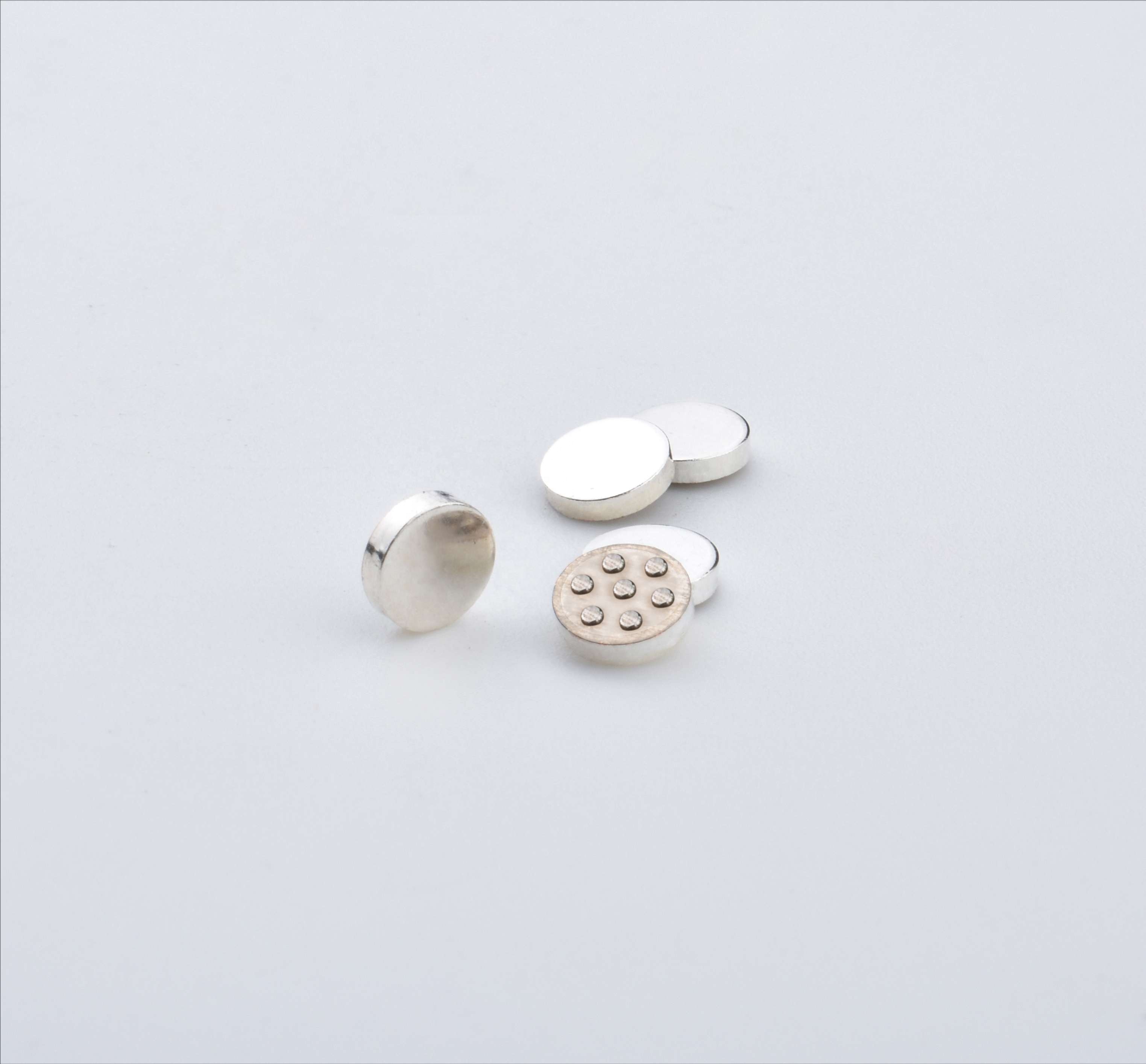
Energy efficiency is a core goal of the smart grid. Every milliwatt lost to heat at a contact interface is wasted energy. AgZnO contacts are engineered to maintain low contact resistance over hundreds of thousands of operations. By optimizing the zinc oxide content and adding specialized dopants, we can achieve high % IACS conductivity while maintaining superior anti-welding performance. This reduces the total energy loss of the grid infrastructure and lowers the thermal load on sensitive electronic controls.
The Role of Bimetal Technology in Grid Components
Given the massive number of switching points in a modernized grid, cost-efficiency is a major consideration. Bimetal rivets using AgZnO on a copper shank provide the perfect balance of performance and economy. The copper shank ensures excellent heat dissipation and electrical flow, while the AgZnO face provides the necessary arc erosion resistance. This allows grid equipment manufacturers to deploy high-reliability switching at scale without the excessive cost of solid silver components.
Conclusion
The smart grid is the backbone of a sustainable energy future. By prioritizing advanced materials like AgZnO in our contactors and switches, we can build a power network that is more resilient, efficient, and stable. At Contactrivets, we are proud to be at the forefront of grid modernization technology. Contact our technical team today to learn more about our specialized AgZnO material solutions and how they can enhance your smart grid hardware.