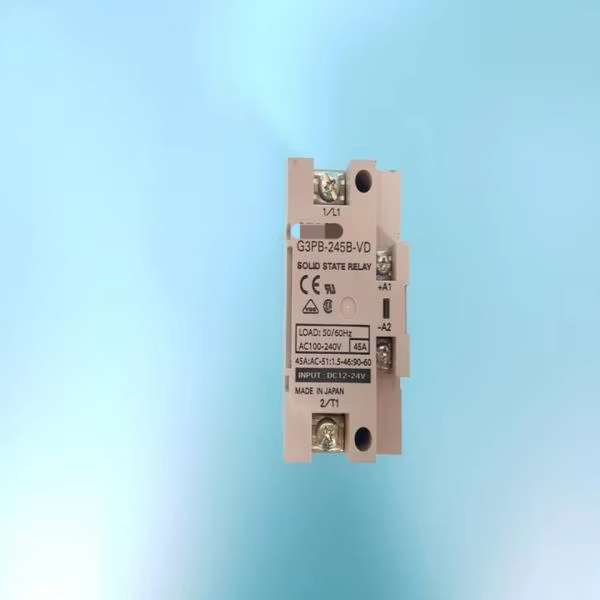
In the evolving world of industrial control, a long-standing debate has centered on solid-state vs. mechanical contactors. Each technology has its own set of advantages and limitations. However, as we move through 2026, the industry is increasingly moving toward hybrid application trends that combine the strengths of both. For engineers, understanding how to integrate traditional silver-based contacts with modern power electronics is the key to achieving maximum switching efficiency.
The Strengths of Mechanical Contactors
Mechanical contactors, relying on silver-based contact rivets, remain the industry standard for high-power switching. Their primary advantages include a complete physical “air gap” when open (ensuring zero leakage current) and extremely low voltage drop when closed. For applications requiring safety isolation or handling high-power AC and DC loads, the mechanical contactor remains unsurpassed in its simplicity and reliability. Materials like AgSnO2 have further extended the electrical life of these devices, making them more competitive than ever.
The Advantages of Solid-State Switching
Solid-state relays (SSRs) and contactors use semiconductors (like IGBTs or SiC MOSFETs) to switch current. They offer near-infinite mechanical life, silent operation, and high-speed switching that allows for precise power control (such as PWM). However, they also generate significant heat due to their internal voltage drop and lack the physical isolation required for many safety applications. In high-current scenarios, the thermal management of an SSR can become complex and expensive.
The Rise of the Hybrid Contactor
The 2026 trend is toward hybrid designs where a solid-state device handles the high-energy “make” and “break” operations (eliminating arcing), while a mechanical contactor handles the “steady-state” current flow (eliminating the voltage drop and heat of the semiconductor). This combination offers the best of both worlds: zero-arc switching, near-infinite electrical life, and maximum energy efficiency. For these hybrid systems, the silver contact rivets must be optimized for low resistance and high thermal stability, as they are no longer subject to severe arc erosion.
Selecting the Right Material for Hybrid Duty
In a hybrid architecture, the requirements for the mechanical contacts shift. Since the semiconductor handles the arc, the contacts can be optimized for % IACS conductivity and long-term contact resistance stability. High-purity silver or fine-grained AgNi alloys are often excellent choices. Using bimetal rivets ensures that the heat generated during steady-state operation is efficiently dissipated into the busbars, maintaining the integrity of the power electronics.
Conclusion
The future of switching is not a choice between solid-state and mechanical, but a clever integration of both. By combining the precision of power electronics with the reliability of silver-based contacts, engineers can build control systems that are more durable, efficient, and compact than ever before. At Contactrivets, we specialize in high-performance contact solutions for both traditional and hybrid applications. Contact us today to learn how our advanced material science can support your next-generation industrial control project.