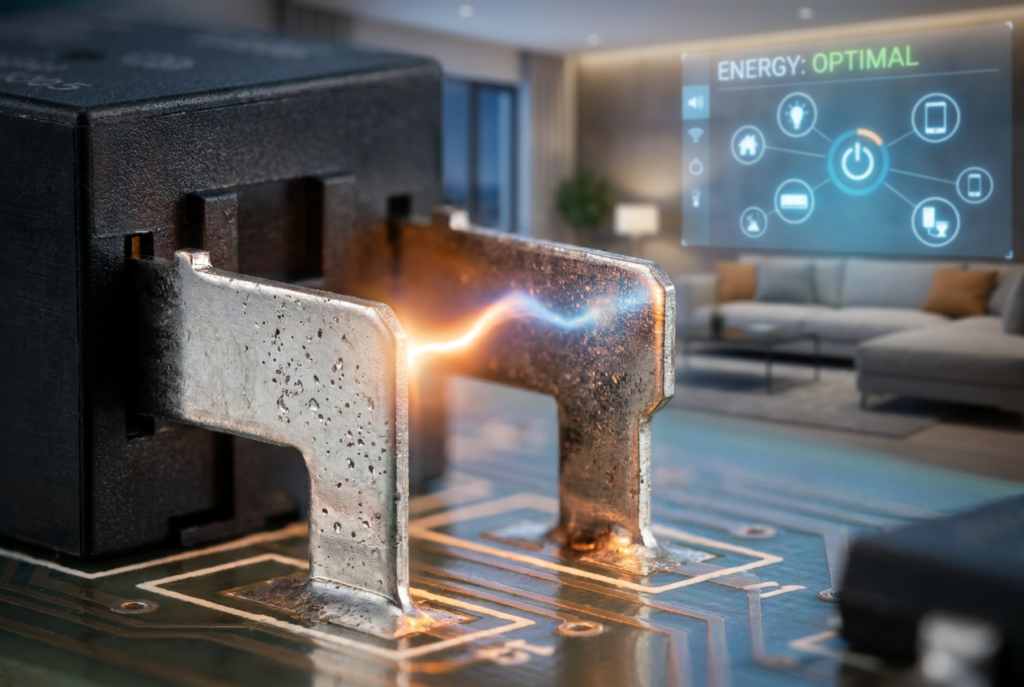
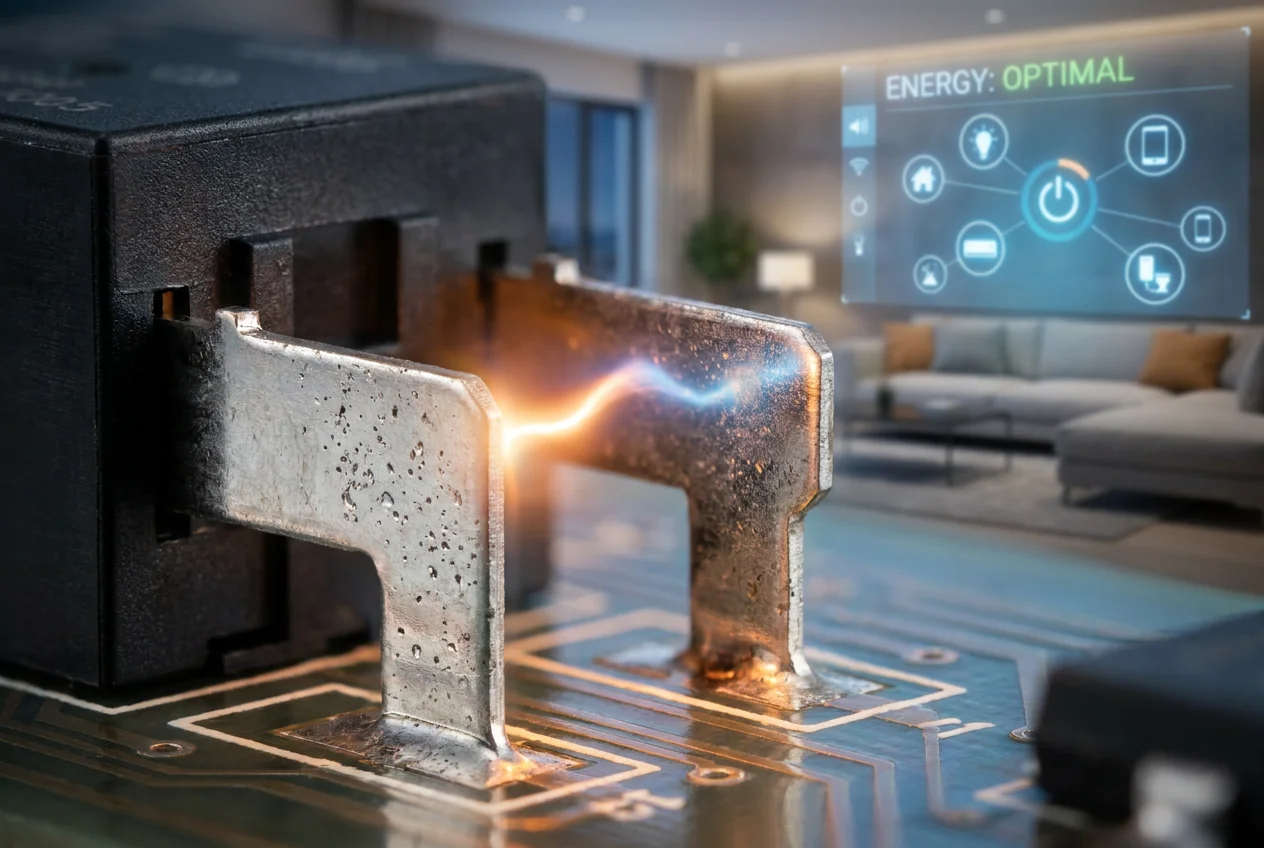
The rapid proliferation of smart home technology has placed unprecedented demands on the humble electromechanical relay. As these devices become the “brains” behind lighting control, smart plugs, and HVAC systems, the selection of contact materials has shifted from a secondary consideration to a primary engineering challenge. In particular, the performance of silver alloys under capacitive loads has become a critical focal point for ensuring long-term reliability and preventing premature failure.
The Challenge of Capacitive Loads
Capacitive loads are ubiquitous in modern smart homes. LED drivers, switch-mode power supplies (SMPS), and electronic ballasts all exhibit high capacitance. Unlike resistive loads, where current and voltage are in phase, capacitive loads create a massive inrush current the moment the contacts close. This inrush can be 50 to 100 times the steady-state operating current, lasting only a few milliseconds but exerting extreme thermal and mechanical stress on the relay contacts.
For a relay rated at 10A, a capacitive inrush can spike to over 100A. If the contact material is not specifically selected for this environment, the resulting micro-arcing can lead to contact welding, where the two surfaces fuse together, or rapid arc erosion, which increases contact resistance and eventual failure.
Silver Alloy Performance Analysis
In the realm of Smart Home Relay Selection, three silver alloys stand out: AgNi (Silver Nickel), AgSnO2 (Silver Tin Oxide), and AgCdO (Silver Cadmium Oxide – though largely phased out due to RoHS compliance).
- AgNi (Silver Nickel): Excellent for low-power signal switching but prone to welding under high inrush currents. Its high thermal conductivity is an advantage, but its lower resistance to arc erosion makes it less ideal for high-capacitance LED loads.
- AgSnO2 (Silver Tin Oxide): The current industry standard for capacitive loads. It offers superior anti-welding properties and exceptional resistance to arc erosion. The tin oxide particles dispersed within the silver matrix act as “stumbling blocks” for the arc, preventing the formation of large molten pools that lead to welding.
- AgZnO (Silver Zinc Oxide): An alternative for certain AC applications, providing good anti-welding performance, though generally considered slightly less versatile than tin oxide for high-frequency switching.
Engineering for Inrush Currents
When selecting a relay for a smart home application, engineers must look beyond the nominal load rating. The “TV rating” or “High Inrush” capability is far more indicative of performance. A relay using AgSnO2 contacts with a specialized doping agent (such as Indium Oxide) can handle the peak energy of a capacitive surge far better than standard silver contacts.
Furthermore, the mechanical design of the relay—such as the contact pressure and the gap distance—plays a vital role. High contact pressure ensures that the initial contact “spot” is large enough to dissipate the heat of the inrush current without melting the silver alloy surface.
Conclusion
As smart homes continue to evolve, the demand for robust, high-performance relays will only increase. By prioritizing Smart Home Relay Selection based on the metallurgical properties of silver alloys, manufacturers can ensure their devices survive the harsh realities of capacitive inrush. For modern LED and electronic loads, Silver Tin Oxide (AgSnO2) remains the undisputed champion of reliability and safety.