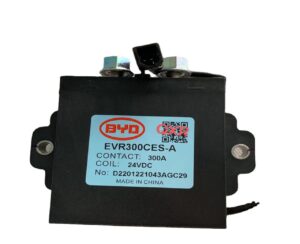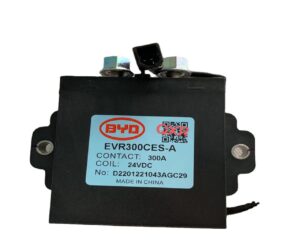
As the automotive industry pivots toward high-voltage electric vehicles (EVs), the demands placed on DC relays (contactors) have reached unprecedented levels. Operating at voltages often exceeding 400V or 800V DC, these components must manage massive currents while ensuring safety and reliability. One of the most critical factors in the design of these relays is the optimization of contact force. From a mechanical engineering perspective, balancing the contact force is a delicate exercise in managing constriction resistance, thermal dissipation, and weld resistance.
The Physics of Contact Force: F = kx and Constriction Resistance
The relationship between contact force and electrical performance is rooted in the physics of constriction resistance. No contact surface is perfectly flat; at a microscopic level, current flows through a limited number of “a-spots” where the surfaces actually meet. According to Holm’s theory, the constriction resistance ($R_c$) is inversely proportional to the square root of the contact force ($F$).
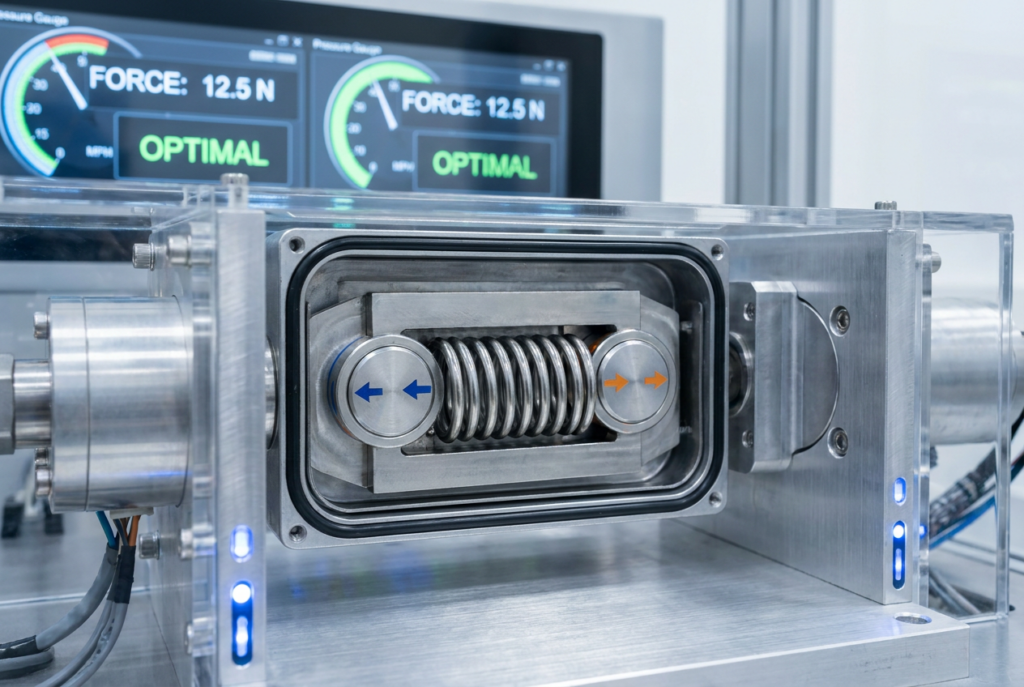
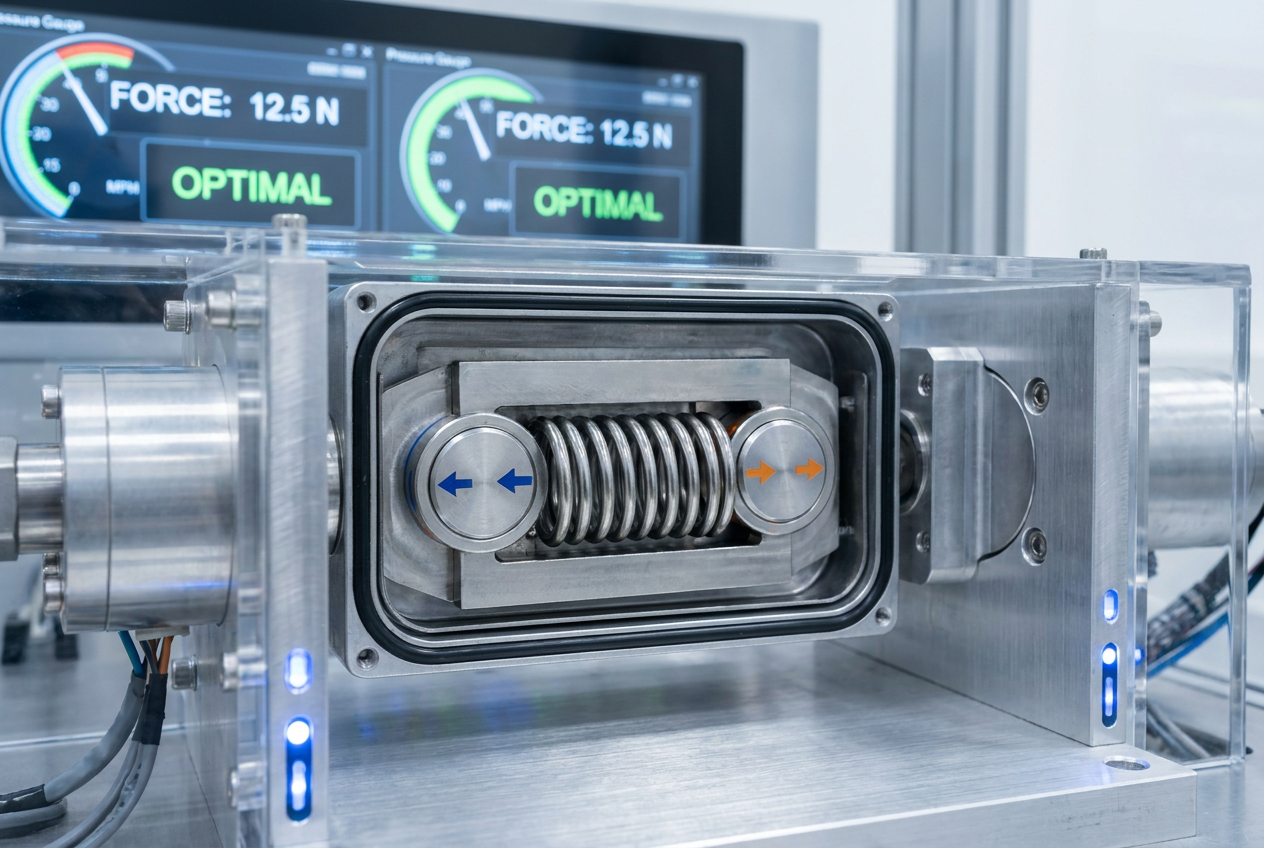
In practice, the contact force is generated by a spring mechanism, governed by the classic Hooke’s Law, $F = kx$. To minimize $R_c$ and the resulting $I^2R$ power loss (which manifests as heat), engineers aim for a higher contact force. However, increasing $F$ requires stronger springs and more powerful actuators (coils), which increase the size, weight, and power consumption of the relay—all of which are detrimental in EV design.
Balancing Weld Resistance and Contact Bounce
Weld resistance is perhaps the most significant challenge in HV DC relays. During a “make” operation, the contacts often bounce. Each bounce creates a small arc that melts the silver contact material. If the contact force is insufficient when the surfaces finally settle, the molten metal can fuse, creating a permanent weld. This is especially dangerous in EV battery disconnect units (BDUs).
A higher contact force helps in two ways: it physically breaks small micro-welds that may have formed during the bounce and it increases the contact area, reducing the temperature at the interface. However, too much force can cause excessive mechanical wear and deformation of the silver alloy, leading to a shortened mechanical life. The engineering goal is to find the “Goldilocks” zone where the force is high enough to suppress bounce and prevent welding, but low enough to maintain mechanical integrity.
Avoiding Contact Bounce in EV Charging Systems
In EV charging systems, where relays may handle hundreds of amps for extended periods, even a few milliseconds of bounce can be catastrophic. Modern designs use sophisticated damping materials and specialized spring geometries to absorb the kinetic energy of the moving contact. By reducing the number and duration of bounces, engineers can significantly reduce the cumulative arc energy, thereby lowering the risk of dynamic welding and material transfer.
Thermal Management and Resistance Loss
High contact resistance doesn’t just waste energy; it generates heat that can degrade the surrounding insulation and even lead to thermal runaway. In high-voltage DC systems, the temperature rise at the contact interface is a primary failure mode. By optimizing the contact force to achieve a stable, low resistance, engineers ensure that the relay can operate continuously at its rated current without exceeding safe temperature limits. This often involves the use of high-conductivity silver tin oxide alloys in conjunction with precisely calibrated contact springs.
Conclusion
Optimizing contact force in HV DC EV relays is a multidimensional engineering challenge. It requires a deep understanding of mechanical spring design, electrical contact theory, and metallurgical science. By carefully balancing the need for low constriction resistance against the requirements for weld resistance and mechanical longevity, engineers can create relays that meet the extreme safety and performance standards of the modern electric vehicle. As we move toward 800V architectures and beyond, the science of contact force will remain a cornerstone of EV power management.